Google Ads vs Meta Ads Which is Better for Your Hospital or Clinic in 2026
15Apr

Google Ads vs Meta Ads: Which is Better for Your Hospital or Clinic in 2026?

If you run a hospital, clinic, or healthcare practice, you already know the pressure: more patients are searching for care online than ever before. But here is the real question every healthcare marketer is wrestling with in 2026 – should you invest your advertising budget in Google Ads vs Meta Ads (Facebook & Instagram)? Or is the answer a smarter combination of both?

At WEBOPTECH, we work with healthcare providers across India and beyond, and this is one of the most common – and most important – questions we hear. This guide breaks it all down in a way that is honest, practical, and grounded in what actually works for hospitals and clinics today.

Why Healthcare Marketing Is Different

Before we compare the two platforms, let us acknowledge something important: healthcare is not a typical industry. You are not selling shoes or software. You are earning the trust of people who are anxious, unwell, or making decisions on behalf of someone they love. Every ad you run, every word you choose, reflects your clinic’s values and your commitment to patient care.

This means your advertising strategy must balance two things: being visible when patients need you most and building the kind of trust that converts a click into a consultation booking.

Both Google Ads and Meta Ads can help you achieve this – but in very different ways. If you are not sure whether your current digital strategy is working at all, we recommend first reading our breakdown of the top digital marketing mistakes costing healthcare practices – it is a helpful starting point before investing further in paid ads.

Google Ads for Hospitals and Clinics: Capturing Intent

Google Search Ads operate on a simple but powerful principle: someone types “best orthopaedic clinic near me” or “diabetes specialist in Bhubaneswar” and your ad appears right at the top of the results. That person is already looking for help. They have intent. They are ready to act.

When Google Ads Works Best for Healthcare:

  • Promoting specific services: cardiology consultations, physiotherapy, diagnostic packages, and dental procedures.
  • Capturing urgent care searches: emergency services, 24/7 clinics, same-day appointments.
  • Local search visibility: appearing when patients search for care in your city or neighbourhood. This works even better when your clinic is properly listed and optimised on Google Maps – the two together create a powerful local presence.
  • Driving immediate appointment bookings, especially for high-value treatments.

Google Ads also gives you powerful targeting through Google Display and Performance Max campaigns, allowing you to stay visible across Gmail, YouTube, and thousands of health-related websites – keeping your clinic top-of-mind throughout the patient’s decision journey.

Many clinic owners overlook that Google requires advertiser identity verification before ads can go live, especially in healthcare. Setting this up correctly helps avoid delays and disapprovals.

Also, Google Ads and SEO work best together, not separately. If you’re deciding where to start, our comparison of SEO vs Google Ads for faster results gives a clear breakdown to help you use your budget wisely.

The honest reality:

Google Ads can be more expensive per click in healthcare, especially for competitive specialties.
But the quality of that traffic – people actively searching for the exact care you provide –
often makes the investment worthwhile.


Meta Ads for Hospitals and Clinics: Building Awareness and Trust

Meta Ads (running across Facebook and Instagram) work differently. Rather than catching someone mid-search, they reach people as they scroll through their daily feed. This is an interruption-based model – which, in healthcare, is not a weakness. It is actually a strategic strength when used correctly.

Think about it this way: not every patient knows they need a health check-up. Someone scrolling Instagram at 8 PM may not have searched for “cardiac screening” yet – but a well-crafted ad about heart health awareness might prompt them to book one. That is the power of Meta Ads: they create demand before the patient even realises they have one.

When Meta Ads Works Best for Healthcare:

  • Preventive care campaigns: health screenings, vaccination drives, annual wellness packages.
  • Brand storytelling: sharing patient success stories and social proof (with consent), introducing your specialist team, building community trust.
  • Hyper-local targeting: reaching specific demographics, age groups, or localities around your clinic.
  • Retargeting: re-engaging people who visited your website or interacted with your content but did not book.

Meta Ads typically offer a lower cost-per-impression, making them excellent for awareness campaigns and building the long-term reputation your clinic needs. In 2026, with short-form video ads on Instagram Reels and Facebook Stories, healthcare providers will have more engaging, less clinical formats to connect with patients on a human level.

Head-to-Head Comparison: Google Ads vs Meta Ads for Healthcare

Comparison OF Google Ads vs Meta Ads for Healthcare

The 2026 Reality: Why Healthcare Needs Both

Here is what years of running healthcare ad campaigns have taught us: the most successful clinics do not choose between Google Ads and Meta Ads. They use both in a coordinated way.

  • Two-stage patient journey:
    A patient first discovers your clinic through a Facebook video (e.g., about managing diabetes). Later, when symptoms worsen, they search “diabetes specialist near me” on Google and find your ad. The second touchpoint converts because the first one already built trust.
  • Smarter integration with AI tools (2026):
    Google’s Performance Max runs ads across Search, Display, YouTube, and Gmail, while Meta’s Advantage+ optimizes placements in real time. When messaging is consistent across both platforms, it creates a smooth journey from awareness to appointment booking.
  • Your website still matters most:
    If traffic is coming but appointments aren’t converting, your landing page may be the issue. Ensure your website is built for mobile-first patient experience – because most healthcare searches in 2026 happen on smartphones, and a poor experience can waste your ad spend.

Healthcare Advertising Compliance: What You Must Know

Both Google and Meta have strict advertising policies for healthcare content. In India, the Central Consumer Protection Authority (CCPA) guidelines and AYUSH regulations further shape what healthcare providers can and cannot claim in ads. Here are the non-negotiables:

  • Never make unqualified medical claims or guaranteed cure statements.
  • Always include appropriate disclaimers on before/after content.
  • Obtain informed consent before using patient testimonials in any ad format.
  • Avoid targeting based on sensitive health conditions on Meta (their policy prohibits this).

Working with a specialised healthcare digital marketing agency – one that understands both the platforms and the regulatory landscape – is not just helpful. It is essential to protecting your clinic’s reputation and avoiding costly ad disapprovals.


Our Recommendation for Hospitals and Clinics in 2026

Frequently Asked Questions (FAQs)


1. Is Meta better than Google Ads?

If your goal is immediate lead generation, Google Ads may be the better option. If your goal is awareness or education, Meta Ads may be more effective. In many cases, the best approach is not Meta or Google, but Meta and Google working together.

2. How do Facebook and Instagram Ads help hospitals or clinics?

Facebook and Instagram Ads help clinics get more patients by targeting the right local audience, showcasing treatments and testimonials, and driving direct inquiries through calls, WhatsApp, or lead forms. They also retarget interested users, increasing chances of appointment bookings.

3. Which ads are best for getting patients quickly?

Google Ads are best for quick patient acquisition because they target people actively searching for treatments, while Meta Ads are better for awareness and retargeting

4. How can clinics reduce ad costs while increasing patient leads?

  • Use long-tail keywords (Google)
  • Use video creatives (Meta)
  • Retargeting campaigns
  • Geo-targeting

5. How long does it take to see results from Google Ads vs Meta Ads?

  • Google Ads → Immediate (within days)
  • Meta Ads → 2–4 weeks (learning + optimization)

6. Is it better to use both Google Ads and Meta Ads together?

Yes- combined strategy gives best results (Search + Awareness + Retargeting funnel).

7. Are Meta Ads effective for healthcare marketing?

Yes, especially for:

  • Branding
  • Awareness campaigns
  • Cosmetic & elective treatments
  • Retargeting previous visitors

8. Are Google Ads too expensive for healthcare marketing in 2026?

Google Ads costs in healthcare vary depending on the place, competition, and the treatments you promote. Even if some keywords are costly, they attract high-intent patients, often delivering better conversions and ROI.

9. Should a new clinic start with Google Ads or Meta Ads?

A new clinic should usually start with Google Ads to generate immediate patient inquiries. Once a steady flow is established, adding Meta Ads helps build brand trust, local awareness, and retargeting, improving long-term growth.


Final Thoughts: The Right Platform Is the One That Serves Your Patients

At the end of the day, both Google Ads and Meta Ads are simply tools – powerful ones, but tools nonetheless. What matters is how you use them in service of the patients who need your care. In 2026, the digital landscape for healthcare has matured significantly. Patients are more informed, more discerning, and more likely to research a clinic thoroughly before booking. Your advertising must reflect that.

The clinics that will win in this environment are those that combine strategic visibility on Google with genuine trust-building on Meta – all while maintaining the highest ethical and regulatory standards.

At WEBOPTECH, we specialise in exactly this – healthcare digital marketing that is empathetic, compliant, and results-driven. Whether you are a single-specialty clinic in Bhubaneswar or a multi-speciality hospital expanding your reach, we can help you build a strategy that fills your appointment book and your patients’ trust.

Ready to grow your patient base with the right digital strategy?

Talk to the WebOpTech team today. We offer a free digital marketing audit for hospitals and clinics. Let’s build something that works – for you and for your patients. 

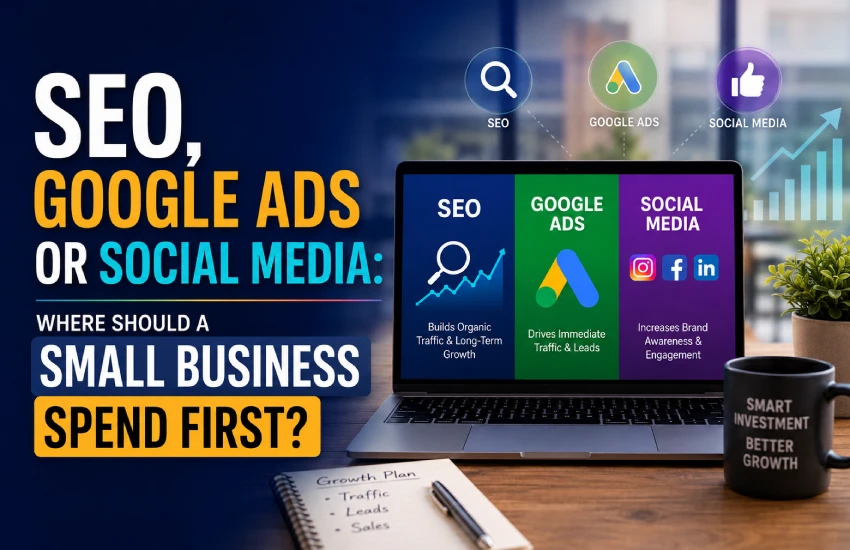
SEO vs Google Ads: What Works Faster?
31Oct

SEO vs Google Ads: Which One Drives Sales Quicker for Small Businesses?

In today’s competitive digital world, small businesses need smart marketing strategies to stand out and attract customers. Two of the most powerful tools in digital marketing are SEO (Search Engine Optimization) and Google Ads (Pay-Per-Click Advertising). But when you’re running a small business with limited time and budget, one question matters most – Which one drives sales quicker: SEO or Google Ads? 

Let’s explore the difference, benefits, and how both can help your business grow – especially if you’re a small business owner in Bhubaneswar or anywhere in Odisha.

What is SEO?

Search Engine Optimization (SEO) is the process of improving your website to rank higher on search engines like Google.
When someone searches for your products or services, SEO helps your website appear organically (without paying for ads).

SEO Marketing Concept

How SEO Works:
  • Optimizing website content with relevant keywords
  • Building quality backlinks
  • Creating engaging blog posts and landing pages
  • Improving website speed and user experience
  • Setting up local SEO (Google Business Profile, reviews, maps, etc.)
Example:

If you run a bakery in Bhubaneswar and optimize your website for keywords like “best bakery in Bhubaneswar” or “birthday cakes in Odisha”, you can appear in top search results when people look for those terms.

What is Google Ads?

Google Ads (also known as Pay-Per-Click or PPC) is a paid advertising platform where your business appears at the top of Google search results instantly – but you pay each time someone clicks your ad.

Google Ads Management

How Google Ads Works:
  • You choose target keywords for your ads
  • Set a daily or monthly budget
  • Create ad campaigns with catchy headlines and calls-to-action
  • Pay Google only when someone clicks on your ad
Example:

If that same bakery runs a Google Ad for “custom birthday cakes in Bhubaneswar”, your ad can appear immediately at the top of search results – even if your website is new.

SEO vs Google Ads: Key Differences

Factor SEO Google Ads
Cost Free clicks (investment in time and optimization) Paid per click or impression
Speed of Results Slow – takes 3 to 6 months Instant – live in 24 hours
Longevity Long-term, sustainable growth Short-term visibility (stops when you stop paying)
Trust Level High – users trust organic results Moderate – users know it’s an ad
Targeting Options Based on keywords and content Based on location, keywords, demographics, interests
Control Limited (depends on Google’s algorithm) Full control over audience and budget
Best For Building brand visibility & long-term leads Getting quick traffic & immediate sales

Which One Drives Sales Quicker?

If your goal is quick sales, Google Ads wins the race.

Here’s why:

  • Google Ads show your business instantly at the top of search results.
  • Perfect for new websites that haven’t yet built SEO authority.
  • You can target ready-to-buy customers with specific keywords like “book water sports in Dubai today” or “buy cakes online Bhubaneswar.”

However, while Google Ads drives faster results, SEO delivers more consistent and cost-effective growth over time.

So, the best strategy depends on your goal and timeline:

  • Want quick leads? → Go for Google Ads.
  • Want long-term, free traffic? → Focus on SEO.
  • Want both growth and stability? → Combine SEO + Google Ads.

Why Small Businesses Need Both SEO and Google Ads

For small businesses in Bhubaneswar and across Odisha, combining both SEO and Google Ads offers the best of both worlds.


SEO and Google Ads benefits for business


1. Build Long-Term Brand Trust (with SEO)

SEO helps you appear in organic searches, Google Maps, and local listings – creating brand trust among your target audience.

2. Get Instant Traffic (with Google Ads)

While your SEO builds up, Google Ads ensures your website gets immediate visibility and leads from day one.

3. Data Insights for Better Decisions

Both SEO and Ads provide valuable data about which keywords and audiences convert best – helping you refine your marketing strategy.

4. Budget Flexibility

Start with Google Ads to generate quick results, and then shift more focus to SEO once your business gains visibility and trust.

Advantages of SEO for Small Businesses

  • Cost-effective in the long run
  • Builds credibility and trust
  • Brings consistent organic traffic
  • Improves user experience and brand awareness
  • Ideal for local searches (e.g., “digital marketing agency near me”)

Advantages of Google Ads for Small Businesses

  • Delivers instant results
  • Easy to measure and track ROI
  • Highly targeted campaigns (location, age, interests, etc.)
  • Great for time-sensitive offers or promotions
  • Ideal for startups or new websites with low visibility

When Should You Choose SEO or Google Ads?

Situation Best Option
New business or website Google Ads
Long-term brand growth SEO
Seasonal offers or events Google Ads
Local business targeting customers nearby SEO + Google Ads
Limited marketing budget Start with SEO, scale with Ads

SEO and Google Ads Together: A Winning Combination

The most successful digital marketing strategies use both SEO and Google Ads together.

Here’s how it works:

  • Run Google Ads for quick conversions and visibility.
  • Use SEO to build long-term organic authority.
  • Analyze ad data to discover high-performing keywords and use them in your SEO strategy.
  • Gradually reduce ad spend as SEO starts generating steady traffic.

This combined approach ensures that your business stays visible – both in paid ads and organic search results.

Conclusion

When it comes to SEO vs Google Ads, both play essential roles in helping small businesses grow online. 

  • If you want immediate sales, Google Ads gives faster results.
  • If you want sustainable growth, SEO is your best investment.
  • But for the strongest digital presence, use both together strategically.

Grow Your Business with WebOpTech

At WebOpTech, a trusted digital marketing agency in Bhubaneswar, Odisha, we help small businesses achieve online success through result-driven SEO and Google Ads campaigns.

Whether you want quick leads or long-term growth, our experts can design a strategy tailored to your business goals.

google advertiser verification
24Oct

Google Advertiser Verification: Complete Step-by-Step Guide (2025 Updated)

If you run ads on Google, you’ve probably seen the prompt asking you to complete Advertiser Verification. Many businesses face confusion or delays completing it, often because they don’t understand what Google is asking for.

In this guide, we’ll walk you through the entire verification process, explain what each step means, and share pro tips to ensure a smooth approval – based on the latest 2025 Google Ads dashboard updates.

What Is Google Advertiser Verification?

Google Advertiser Verification is part of Google’s transparency initiative. It ensures that every advertiser is a legitimate, accountable business entity. Once verified, your ads will display “About this advertiser” information such as:

  • Advertiser name
  • Business location
  • Who paid for the ad

This helps users trust your ads more and allows Google to maintain a safer ad ecosystem.

Why Advertiser Verification Is Important

Without completing advertiser verification:

  • Your ads may stop running.
  • You’ll lose eligibility to advertise certain categories.
  • You may miss verification deadlines, which can lead to account pauses.

Completing the verification builds trust, improves compliance, and ensures your ads appear transparently.

Advertiser-verification-www-weboptech-com-Google-Ads

Step-by-Step Guide to Complete Google Advertiser Verification

The attached dashboard (shown above) displays the four main sections Google uses to verify your advertiser identity.

1. Answer a Few Questions About Your Organization

  • Time required: ~5 minutes
  • This is the first task you’ll see. Google asks basic questions to determine your business type and advertising purpose.
  • You’ll need to select whether you’re:
    • An individual or organization
    • Running ads on behalf of your own business or a client
  • Make sure your responses match your business documents exactly (company name, registration number, etc.).

Tip: Use your legal business name as registered with MCA or other government entities-avoid using brand nicknames.

2. Confirm Your Organization’s Email (Optional but Recommended)

  • Time required: ~5 minutes
  • This step helps Google verify that your domain and organization email (e.g., info@yourbusiness.com) are valid.
  • Verification usually happens via an email link sent to your registered business domain.

Tip: Use your official business domain email, not Gmail or Yahoo IDs. Example: info@weboptech.com.

3. Provide Your Dun & Bradstreet (D-U-N-S) Information

  • Time required: ~5 minutes
  • This is optional, but adds credibility.
  • D-U-N-S is a global business identifier that helps Google verify your company’s legitimacy.
  • If you don’t have one, you can still proceed – but adding it can speed up verification and boost trust.

Tip: If your business operates internationally, get a free D-U-N-S number from Dun & Bradstreet’s official website.

4. Ad Disclosure: Who Pays for Your Ads

  • Your ad disclosure section shows:
    “Ads funded by [Your Business Name]”
  • You’ll be asked to confirm who funds your ads—usually your company (e.g., “Ads funded by WEBOPTECH SOLUTIONS PVT LTD”).
  • If you’re an agency managing client ads, you must disclose your client’s legal entity name instead.

Tip: Ensure that the “funded by” name matches your billing and payment info in Google Ads.

Completed Tasks Section

Once you finish each step, you’ll see a “Completed tasks” section at the bottom (like in the screenshot).
For example:

✅ Confirmed that you don’t plan to run European Union political ads.

If any section shows as Incomplete, click “Start Task” again and verify your answers.

Review Time and What to Expect

After submitting your details, Google typically reviews everything within 1 to 10 days.

During this time:

  • You can continue running existing ads (unless Google requires verification before continuing).
  • You’ll get email notifications once verification is complete or if additional info is needed.

Common Reasons for Verification Delays

  • Business name mismatch between documents and ad account.
  • Using a personal email instead of an organization domain.
  • Incomplete organization details or missing payment info.
  • Providing brand name instead of legal company name.

Pro Tip: Always double-check that your Google Ads billing profile, domain registration, and business certificate use the same name and address.

Final Checklist Before Submitting Advertiser Verification

Step Task Stats
1 Answer organization questions   ✅
2 Confirm email domain   ✅
3 Provide D-U-N-S info (optional)   ✅
4 Confirm ad funding disclosure   ✅
5 Confirm EU political ads status   ✅

Once all show as completed, your advertiser profile is fully verified!

💡 Key Takeaways

  • Verification builds credibility and compliance.
  • Always use your registered business name and domain-based email.
  • Start early – it may take up to 10 business days.
  • Keep your business details consistent across all Google services.

Example: WEBOPTECH SOLUTIONS PVT LTD

In the example shown in the screenshot, the advertiser disclosure reads:

“Ads funded by WEBOPTECH SOLUTIONS PVT LTD”

This means all ads from that account will transparently display the verified business name in Google’s Ads Transparency Center.

Advertiser-verification-complete-www-weboptech-com

Conclusion

Completing Google Advertiser Verification may seem technical, but it’s actually a simple 4-step process once you understand what’s required.

By following this guide, you can complete the verification confidently – without unnecessary confusion or delays.

If you’re still unsure or facing verification issues, our team at WebOpTech can help you get verified quickly and correctly.

👉 Contact WebOpTech for expert help with Google Ads setup, domain verification, and ad compliance.

Categories:

Google Ads

Tags:

No tags
google-store-widget
18Sep

Google Re-Announces the Store Widget (With New Features)

Google has officially re-introduced its Store Widget, a tool aimed at helping retailers build trust, improve visibility, and ultimately boost sales. Although the widget has existed in some form before, Google is now offering clearer distinctions and fresh features.

What Exactly is the Store Widget and What’s Been Updated?

Google describes the Store Widget as a way to embed key information about your store directly on your website: things like service policies, review summaries, ratings, and whether your store is a “Top Quality Store.”

But what’s new now?

Previously, there was mainly the Top Quality Store badge. Now Google is offering three separate widget types:

  • Top Quality Store widget – Earning a Top Quality Store unlocks this section, showcasing your dedication to outstanding customer service and a high-quality shopping experience.

Top quality store badge


  • Store Rating widget – This version will show if you have store ratings, but are not a Top Quality Store on Google. It displays a summary of your store reviews, and key information about your service and policies.

Store ratings widget


  • Store Quality widget – This shows if you don’t have store ratings, and are not a Top Quality Store on Google. It shows key information about your service and policies.

Generic widget


The help documentation from Google (Merchant Center / Search Central) has been updated to clarify these differences.


Why These Widgets Matter: What Retailers Gain

These distinctions are more than just labels, they affect how customers perceive your store and how well you convert visits into sales. Key benefits include:

  • Increased Sales: Businesses using the widget saw up to an 8% higher sales lift within 90 days compared to similar businesses not using it.
  • More Trust / Credibility: Displaying store ratings, service policies, or a “Top Quality Store” badge helps reduce hesitation among potential customers. Seeing concrete proof helps.
  • Improved Visibility: Widgets unify signals about service, policies and reviews, making your store appear more legitimate in Google’s ecosystem. That helps with both ranking trust and customer confidence.


Which Store Widget Should You Use?

Here’s how to decide which one matches your current status:

Your Status Best Widget Type What It Will Show
You have earned Top Quality Store Top Quality Store widget Badge + review summary + service & policy details
You have store ratings, but not Top Quality yet Store Rating widget Your ratings, reviews, and service/policy info
You don’t yet have store ratings or Top Quality status Store Quality widget Key service/policy information without ratings or badge


Where to Find More Info & Set It Up

Google’s updated help documentation gives details on implementation, eligibility, and how the widget behaves for each status.

The Merchant Center / Search Central pages are where you’ll verify your store info, check your eligibility (for example, whether you qualify as a Top Quality Store), and access the widget code.


Best Practices: Make the Store Widget Work For You

To get full value from these widgets, here are some tips:

  • Keep store policies & service info up to date
    If Google finds inconsistencies (e.g. hours, shipping policies), it can reduce trust.
  • Encourage customer reviews
    If you’re close to having store ratings, prompting satisfied customers to leave reviews can unlock the Store Rating or even Top Quality status.
  • Use the right widget for your status
    Don’t try to pretend you are Top Quality if you aren’t; use the correct widget to maintain credibility.
  • Place the widget in visible yet relevant spots
    Good examples are your homepage footer, contact/store locator pages, or near product pages, depending on layout.
  • Monitor performance
    Track metrics (sales lift, conversions, bounce rates) before and after activating the widget. Google’s claim of “up to 8% higher sales in 90 days” is an average benchmark, not guaranteed.


For retailers, this is an opportunity.. not just to add another badge, but to elevate how your store is perceived.

If you’re already doing good work in customer service, policies, reviews, now you can make sure those show up clearly to shoppers. And that clarity often converts to higher sales.

Categories:

Google Ads PPC

Tags:

No tags
Google Ads Tips for Tourism Businesses
04Aug

Top 10 Seasonal Google Ads Tips for Tourism Businesses in 2025

Running a travel or tourism business in 2025? Then you already know that seasonal demand can make or break your bookings. Whether it’s summer holidays, winter escapes, or festival travel, Google Ads can help you attract the right audience at the right time. But simply running ads isn’t enough. You need a seasonal strategy.

Here are the top 10 Google Ads tips for Tourism Businesses to maximize seasonal success this year.

1. Plan Your Campaigns Around Seasonal Peaks

Every travel business has peak seasons. For example:

  • Hill stations: April to June
  • Desert safaris: October to February
  • Pilgrimage tours: Festival periods

Use tools like Google Trends or Google Ads Keyword Planner to find when your target audience starts searching. Start campaigns at least 4-6 weeks before the peak.

2. Use Location Targeting Smartly

Tourism is all about destinations. If you’re promoting Kashmir tours, target cities where tourists commonly come from (e.g., Delhi, Mumbai, Bangalore). You can also exclude areas that are not relevant to your packages.

💡 Bonus Tip: Try using radius targeting for local promotions like weekend getaways.

3. Update Ad Copy with Seasonal Offers

Make your ads feel fresh and timely:

  • “Book Now for Summer 2025 Deals”
  • “Winter Escape to Manali – 20% Off”

Use Countdown Timers in your ad copy to create urgency.

4. Create Separate Campaigns for Each Season or Package

Don’t mix everything in one campaign. Create specific campaigns like:

  • Summer Packages
  • Honeymoon Tours
  • Religious Pilgrimage Trips
  • Winter Treks

This helps with better ad relevance, click-through rate, and conversion tracking.

5. Optimize for Mobile-First Bookings

Most travelers search and book from their phones.

Ensure:

  • Landing pages load in under 3 seconds
  • Call-to-action buttons like “Book Now” or “Call Us” are easy to find
  • Forms are short and mobile-friendly

6. Use Ad Extensions to Provide Extra Info

Add the following extensions to boost performance:

  • Sitelink Extensions: Add other destinations or offers
  • Call Extensions: Let users call directly
  • Location Extensions: Show your office or pickup locations

This increases ad visibility and helps build trust.

7. Use Seasonal Keywords + Destination Combos

Instead of just using “tour packages,” try:

  • “Summer tour packages to Ladakh 2025”
  • “New Year Goa packages for couples”
  • “Budget Kashmir tours in winter”

Use long-tail seasonal keywords for better conversion at lower cost.

8. Run Remarketing Campaigns

Some users might visit your site and leave without booking. Bring them back with:

  • Display ads showing your offers
  • Special deals like “10% off for returning users”

Remarketing can dramatically increase bookings with lower CPC.

9. Monitor & Adjust Daily Budgets

During peak days, like long weekends or holidays, increase your daily ad budget to stay competitive. Pause low-performing ads and reallocate the budget to high-performing ones.

💡 Tip: Use automated bidding like Maximize Conversions for fast-moving seasons.

10. Track Conversions & Use Data Wisely

Don’t guess what’s working. Set up:

  • Conversion tracking for leads, bookings, calls
  • Google Analytics to monitor user behavior
  • Call tracking (if bookings happen via phone)

Make decisions based on performance, not assumptions.

Final Thoughts:

Tourism is one of the most dynamic industries when it comes to seasonal demand. If you plan your Google Ads campaigns right, they can help fill your calendars months in advance.
Start early, stay relevant, and let data guide your decisions.

Want Help with Your Tourism Google Ads Campaign?

We specialize in running high-ROI Google Ads campaigns for travel and tourism businesses. Contact us for a 30-day free trial – let’s boost your bookings this season!

Categories:

Google Ads PPC

Tags:

No tags
Car Rental Google Ads Wasting Budget
04Aug

Car Rental Google Ads Wasting Budget? Avoid These Mistakes.

You’re spending thousands on Google Ads… but the bookings aren’t adding up. Why?

If you run a car rental business, chances are you’ve felt the pain of high ad costs with little return. The truth is—Google Ads can drive serious revenue, but only when done right. Most businesses fall into common traps that silently kill performance.

Let’s fix that.

Here are the most common traps car rental companies fall into when running Google Ads:

1. Targeting the Wrong Keywords

Many agencies or DIY advertisers target broad keywords like:

    • “Car”
    • “Rental”
    • “Vehicle hire”

These are too generic and attract unqualified traffic, like job seekers or general info searchers. You pay for clicks that never convert.

How to Fix it:

Use location-based, intent-driven keywords such as:

    • “Self-drive car rental in Dubai”
    • “SUV car hire in Delhi airport”
    • “Car rental for wedding in Mumbai”

Use phrase match or exact match instead of broad match to refine your audience.

2. No Negative Keywords

Not using negative keywords = money down the drain. For example, if you’re targeting “car rental,” you might get clicks for:

    • “car rental jobs”
    • “car rental scam”
    • “free car rental”

How to Fix it:

Build and regularly update a negative keyword list. Include terms like:

    • “free”
    • “cheap” (if you’re a premium brand)
    • “jobs”
    • “complaint”
    • “review” (if it’s not part of your goal)

3. Landing Page Disconnect

Sending people to your homepage is a BIG mistake. It’s confusing, and conversion rates tank.

How to Fix it:

Send traffic to a dedicated landing page with:

    • Location-specific car options
    • “Call Now” or “Book Now” buttons
    • Pricing & rental duration
    • Google reviews or trust badges

Pro tip: Optimize it for mobile. 80%+ users book from their phone.

4. No Conversion Tracking

Are you tracking how many people:

    • Call from the ad?
    • Fill out the form?
    • Click WhatsApp or “Book Now”?

If not, you’re driving blind.

How to Fix it:
Set up Google Ads conversion tracking or integrate with Google Analytics 4 (GA4). Use call tracking, form submission tags, and even WhatsApp click tracking.

5. Running Only Search Ads

Search ads work, but alone they limit your reach. You may be missing out on:

    • Remarketing
    • YouTube Ads
    • Display Ads for location branding

How to Fix it:

Create a multi-campaign funnel:

    • Search ads for high-intent leads
    • Remarketing ads to re-engage site visitors
    • Display ads to boost brand recall in your city

Solution Recap:

To stop wasting money on google ads and start generating leads that convert:

  • Use specific, intent-based keywords
  • Maintain a smart negative keyword list
  • Create mobile-friendly landing pages
  • Track every action using conversion tools
  • Diversify your ad strategy with remarketing


Tired of wasted clicks and zero bookings? Let our certified Google Ads experts at WebOpTech optimize your Ads.
🔍 30-Day Free Trial | No Setup Fee | Results Guaranteed

Categories:

Google Ads PPC

Tags:

No tags

Want to speak with a expert? Email, Call or WhatsApp us:

Call Anytime

+91 96580 46151
back top
whatsapp