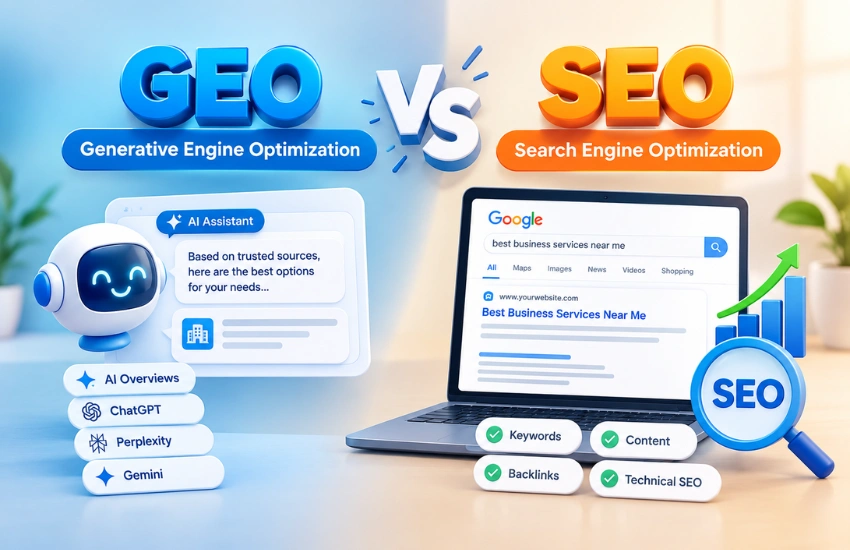
GEO vs SEO comparison for modern business search
07Sep

GEO vs SEO: What’s the Difference and Which One Does Your Business Need?

The way people search is changing. Alongside typing a query into Google, more people now ask AI tools directly – ChatGPT, Claude, Perplexity, Google’s AI Overviews, Gemini – to research businesses, compare products, and get quick answers to specific questions. That shift has introduced a new term into digital marketing conversations: GEO, or Generative Engine Optimization.

This isn’t limited to organic search either – we’ve already covered how Google’s AI Mode is reshaping paid search campaigns, and the same underlying shift is now raising questions for organic strategy too.

For business owners already investing in SEO, this raises an obvious question: is GEO a replacement for SEO, an extension of it, or something else entirely?

Short answer: SEO and GEO are related but not identical. SEO focuses primarily on visibility in traditional search engines. GEO focuses on making information more useful, understandable, authoritative, and discoverable within generative AI search experiences.

Neither one cancels the other out. This article breaks down what each actually means, how they differ in practice, and how a business should think about prioritizing them.

What Is SEO?

Search Engine Optimization (SEO) is the practice of improving a website so it ranks higher in traditional search engine results – primarily Google and Bing. The goal is straightforward: when someone searches for something relevant to your business, your website should be easy to find.

SEO typically covers:

  • Search visibility: Improving how easily your website can be discovered for relevant searches.
  • Keyword and search-intent research: Understanding what people search for and what they are actually trying to accomplish.
  • On-page SEO: Optimizing titles, headings, URLs, content, images, internal links, and other page elements.
  • Technical SEO: Improving crawlability, indexability, site architecture, page speed, mobile usability, security, and other technical factors.
  • Content quality: Creating accurate, useful, original, relevant, and comprehensive information.
  • Topical authority: Building meaningful depth around the subjects, products, or services that matter to your business.
  • Internal linking and website architecture: Connecting related information so both users and search engines can navigate the site more effectively.
  • Link building and authority: Building credible references, mentions, and links from relevant and trustworthy websites.
  • Structured data: Helping search engines understand important information about organizations, products, services, events, and other entities.
  • Local SEO: Improving visibility in local search results, map listings, and location-based searches.
  • User experience: Making the website easy to navigate, understand, and use across different devices.
  • Conversion: Turning organic visibility into meaningful business actions such as calls, enquiries, bookings, purchases, or leads.

For example, imagine a dental clinic targeting the search:

“dentist in [city]”

The goal isn’t simply to place the phrase “dentist in [city]” on a webpage.

A stronger SEO strategy would include a technically healthy website, useful service pages, location information, relevant content, local business signals, credible references, internal linking, good user experience, and clear ways for potential patients to contact the clinic.

In simple terms:

SEO helps search engines discover, understand, evaluate, and rank your website so potential customers can find your business through traditional search.

What Is GEO?

Generative Engine Optimization (GEO) refers to the emerging practice of improving a brand’s content, information, authority, and online presence so that generative AI systems can better understand, retrieve, reference, summarize, and represent that information when generating answers.

This creates a different kind of search experience.

A traditional search might show:

10 blue links → user chooses a website → user reads the information.

A generative search experience may instead provide:

User question → AI researches or retrieves information → AI generates an answer → user may receive sources, citations, recommendations, or brand mentions.

For example, someone might ask:

“What should a small healthcare business look for when choosing a digital marketing agency?”

The AI system may generate an answer using information gathered from multiple sources.

For a business, visibility therefore isn’t limited to appearing as a blue link.

The business may also want its expertise, information, services, research, or brand to be understood, referenced, cited, or accurately represented when an AI system answers related questions.

GEO can involve several areas:

  • Clear and direct answers: Answering the questions customers actually ask without unnecessary filler.
  • Strong content structure: Using meaningful headings, definitions, examples, lists, tables, FAQs, and logical sections.
  • Demonstrated expertise: Showing genuine knowledge and experience rather than repeating generic information.
  • Topical authority: Covering important subjects comprehensively instead of publishing disconnected articles.
  • Brand and entity signals: Clearly explaining who the business is, what it does, where it operates, and what it is known for.
  • Consistent business information: Keeping important facts such as business name, services, locations, and contact information consistent across trusted sources.
  • Credible references: Supporting important claims with reliable and checkable information.
  • First-hand experience: Adding original research, case studies, examples, customer experiences, data, or expert insights.
  • Fresh information: Keeping important information accurate and updated.
  • Machine-readable information: Using appropriate technical structures and structured data where relevant.
  • Multichannel authority: Building a credible presence across relevant websites, publications, directories, reviews, and other trusted sources.
  • Factual accuracy: Making sure the information a business publishes about itself is clear, verifiable, and consistent.

One important point is often misunderstood:

GEO is not simply “writing content for ChatGPT.”

It is about building information that is useful to people and understandable to systems that generate answers.

There is also no guaranteed formula that makes ChatGPT, Gemini, Perplexity, or another AI system mention a particular business. GEO is still an emerging practice, and different AI platforms use different models, retrieval systems, data sources, and processes.

What businesses can control is the quality of their information, the authority of their brand, the consistency of their online presence, and how clearly they demonstrate expertise.

That is where GEO overlaps significantly with good SEO.

GEO vs SEO: What’s the Difference?

The table below breaks down how the two disciplines compare on the factors that matter most.

Factor SEO GEO
Primary Goal Organic search visibility Visibility or citation inside generative AI answers
Main Environment Traditional search engines (Google, Bing) AI-powered search and answer tools (AI Overviews, ChatGPT, Perplexity, Gemini)
Content Focus Search rankings and matching user intent Clear, well-structured, authoritative information AI systems can interpret and reuse
Key Signals Relevance, technical quality, authority, backlinks Content clarity, authority, corroboration, entity signals — still evolving
Typical Outcome Ranking position and click-through traffic Mention, citation, or representation inside an AI-generated response
Maturity Established, well-documented discipline Emerging practice with evolving best practices

One important caveat: no single factor – a schema tag, a statistic, a backlink – guarantees that an AI system will cite your content. GEO is directional guidance based on current patterns, not a formula with predictable outputs.

How Does GEO Work?

Because GEO practices are still evolving, it’s more useful to think in terms of principles than tactics. Businesses that want their content to be usable by generative AI systems generally focus on:

  • Answering questions clearly and directly, rather than burying the answer in filler
  • Demonstrating real expertise, not just repeating commonly available information
  • Providing trustworthy, well-sourced information
  • Structuring content logically – clear headings, scannable sections, defined terms
  • Building topical authority by covering a subject thoroughly over time
  • Strengthening brand and entity signals – consistent naming, clear “about” information, credible mentions elsewhere
  • Supporting important claims with credible, citable sources
  • Creating content that genuinely satisfies the underlying question, not just the keyword

There’s no reliable way to “optimize for ChatGPT” with a guaranteed formula, and any strategy that promises otherwise should be treated with skepticism. What businesses can control is the underlying quality, clarity, and trustworthiness of their content, which improves their odds in both traditional and AI-driven search.

For a more detailed, step-by-step breakdown of these practices, see our guide on how to rank for Google AI Overviews.

GEO vs SEO: Which One Does Your Business Need?

Most businesses aren’t choosing between SEO and GEO – they’re deciding where to focus first.

Choose SEO as the foundation if:

  • Your website has weak organic visibility
  • Your technical SEO needs improvement (speed, mobile experience, indexing)
  • You have little genuinely useful content published
  • Your business depends heavily on Google or Bing for discovery
  • Your local search presence needs improvement

Invest more heavily in GEO-focused practices if:

  • Your SEO foundation is already solid
  • Your customers increasingly research complex questions through AI tools
  • Your business relies on expertise and informational content
  • You want your brand represented accurately when AI tools answer questions about your industry

The best approach for most businesses:

SEO + genuinely helpful content + strong authority + AI-search-friendly information. GEO builds on top of solid SEO fundamentals — it isn’t a shortcut around them.

How to Adapt Your SEO Strategy for AI Search

  1. Create genuinely useful content, not content written to satisfy an algorithm.
  2. Answer specific customer questions directly, in plain language.
  3. Strengthen topical depth instead of spreading thin across unrelated subjects.
  4. Demonstrate first-hand expertise where relevant – real experience, not generic advice.
  5. Make important information easy to understand at a glance.
  6. Build authoritative brand and entity signals across the web.
  7. Keep business information (name, services, location, contact details) consistent everywhere it appears.
  8. Support important claims with credible, checkable sources.
  9. Update outdated content instead of letting it sit stale.
  10. Continue investing in technical SEO – it still matters.

Example: SEO vs GEO for a Local Business

Consider a local digital marketing agency. The same business can – and should – optimize for both kinds of search behavior.

Traditional search: “best digital marketing agency in [city]” – the agency wants to rank well and appear in local results.

AI-assisted discovery: “What should a small business look for when choosing a digital marketing agency?” – here, the goal is for the agency’s published, well-structured advice to be the kind of content a generative engine finds credible enough to draw from when forming its answer.

Same expertise, two different discovery paths. A business that only optimizes for the first query is invisible in the second.

Does GEO Replace SEO?

No. GEO should not be treated as a replacement for SEO.

SEO remains important for search visibility, website discoverability, technical accessibility, and organic traffic. GEO-related practices address an additional discovery layer created by generative search – they don’t remove the need for the foundation SEO provides. Most current industry perspectives treat GEO as complementary to SEO, not a successor to it.

Common GEO and SEO Mistakes

  • Treating GEO as a magic replacement for SEO fundamentals
  • Publishing AI-generated content without adding real value or expertise
  • Chasing AI mentions instead of improving underlying content quality
  • Keyword stuffing, which helps neither traditional nor AI-driven search
  • Writing solely for search engines or AI systems instead of the actual reader
  • Making unsupported or exaggerated claims
  • Ignoring technical SEO because GEO seems more current
  • Losing sight of the actual customer and their real question

Not sure where your business stands on SEO or GEO readiness? We can audit your current search visibility and help you build a strategy that covers both traditional and AI-driven discovery – get in touch for a free consultation.

FAQs

What is the difference between GEO and SEO?

SEO focuses on visibility in traditional search engines like Google and Bing. GEO focuses on how content is understood, trusted, and potentially cited within AI-generated answers from tools like ChatGPT, Perplexity, and AI Overviews.

Is GEO replacing SEO?

No. Most current thinking treats GEO as complementary to SEO, building on the same foundations of quality, authority, and relevance rather than replacing them.

Is GEO the same as AEO?

They overlap. Answer Engine Optimization (AEO) is often used to describe optimizing for direct-answer features, while GEO is a broader term for optimizing for generative AI systems generally. Terminology is still settling across the industry.

Does GEO improve Google rankings?

Not directly. GEO is aimed at generative AI experiences rather than traditional ranking algorithms, though many of the same quality signals – clarity, authority, usefulness – benefit both.

How can a business optimize for AI search?

By publishing clear, well-structured, genuinely useful content that demonstrates real expertise and is supported by credible sources – the same fundamentals that support good SEO.

Does every business need GEO?

Not urgently. Businesses without a solid SEO foundation should prioritize that first. GEO becomes more relevant once core search visibility is already established.

Can SEO help with GEO?

Yes. Strong SEO fundamentals – authoritative content, technical health, credible signals – form the base that GEO efforts build on.

How long does GEO take to work?

There’s no fixed timeline, and because GEO practices are still evolving, results are less predictable than established SEO benchmarks. Consistent, high-quality content over time is the most reliable approach.

Conclusion

SEO and GEO shouldn’t be treated as an either/or decision. SEO builds the foundation for search visibility. GEO represents the evolving effort to make that same expertise and information useful and discoverable within generative search experiences.

The focus, either way, should stay on creating trustworthy, useful, well-structured content that serves the audience first – the discovery channel is secondary to that.

Categories:

Google Ads Local SEO SEO

Tags:

No tags
SEO Google Ads and social media marketing comparison
02Sep

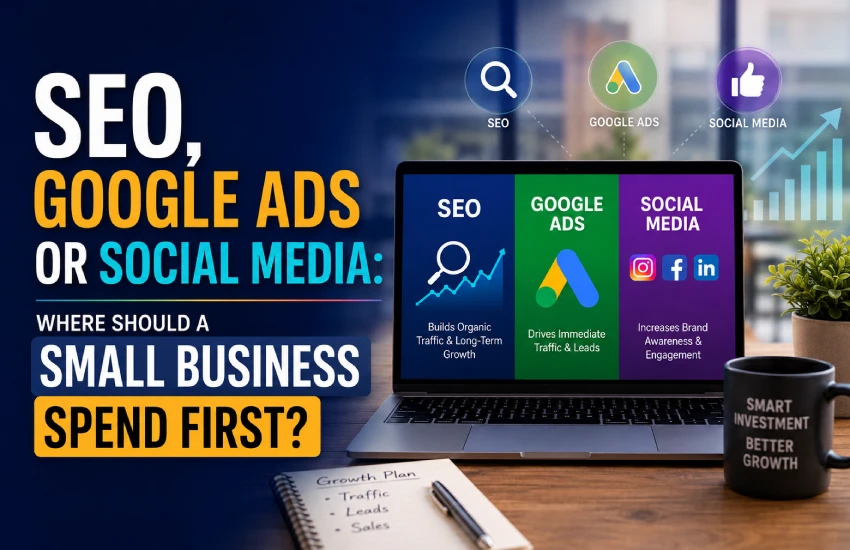
SEO, Google Ads or Social Media: Where Should a Small Business Spend First?

If you run a small business, you have probably heard the same advice over and over again.

“You need SEO.”

“You should run Google Ads.”

“You need to build your brand on social media.”

All of that sounds reasonable until you look at your marketing budget.

If you have ₹30,000, ₹50,000 or even ₹1 lakh available each month, putting money into everything at once may not be the smartest move. You need to know what is most likely to help your business right now.

The real question isn’t whether SEO, Google Ads or social media is better.

The better question is: which one should your business invest in first?

The answer depends on what you sell, how quickly you need customers, how competitive your market is, whether people are already searching for your services and how much time you can afford to wait for results.

Let’s break it down.

The Short Answer

If you need leads quickly and people are already searching for what you sell, Google Ads is often the fastest place to start.

If you want to build a steady source of organic traffic and reduce your dependence on paid advertising over time, SEO is usually the stronger long-term investment.

If your business depends heavily on visual content, recommendations, brand awareness or customer engagement, social media can be extremely valuable, particularly when combined with paid social advertising.

For many businesses, the smartest strategy isn’t choosing one forever.

It is choosing the right starting point and then adding the other channels as the business grows.

Start With the Customer, Not the Marketing Channel

One of the biggest mistakes small-business owners make is choosing a marketing channel before understanding how customers actually find them.

Think about a person who needs an emergency plumber.

They are unlikely to spend three weeks following plumbing companies on Instagram before making a decision. They are probably going to search Google, compare a few businesses, check reviews and call someone.

Now consider someone planning a holiday to Dubai.

They might discover a travel company through Instagram or YouTube, watch videos, compare destinations, search Google later and eventually make a booking.

The buying journey is different.

That is why the right marketing channel depends heavily on customer behavior.

Before spending money, ask:

Where does my customer go when they have a problem I can solve?

That question will tell you much more than a generic list of “best digital marketing channels.”

When Google Ads Should Come First

Google Ads can make sense when customers already have a strong reason to search for your product or service.

Someone searching for:

“dentist near me”

“emergency electrician”

“Dubai desert safari price”

“AC repair near me”

“digital marketing agency in Bhubaneswar”

is already expressing some level of intent.

That makes search advertising particularly useful for businesses selling services where the customer is actively looking for a solution.

WebOpTech’s Google Ads services focus on search, display, shopping and video advertising, with campaign strategies built around business goals such as leads, sales and enquiries.

Google Ads can be a good first investment when:

  • You need leads relatively quickly
  • Customers already search for your services
  • Your average customer value is high enough to support paid acquisition
  • You have a landing page that can convert visitors
  • You can track calls, forms, purchases or other meaningful conversions
  • You are operating in a competitive local market
  • You have a time-sensitive offer or seasonal demand

But there is an important warning.

Google Ads can bring traffic quickly. It cannot fix a bad offer, poor website or weak sales process.

If ten people click your advertisement and nobody contacts you, increasing the budget isn’t necessarily the answer.

You first need to understand why those visitors aren’t converting.

A simple example

Suppose a local dental clinic spends ₹1,000 per day on Google Ads.

If the ads generate calls from people looking for dental treatment, the campaign may be doing its job.

But if the website is slow, the phone number is difficult to find, the landing page doesn’t explain the treatment or nobody answers incoming calls, more advertising won’t solve the underlying problem.

The marketing funnel has several parts.

Search → Click → Website → Enquiry → Follow-up → Patient

A problem anywhere along that path can reduce the final result.

When SEO Should Come First

SEO is a different game.

You don’t normally invest in SEO because you need a large number of customers tomorrow morning.

You invest because you want your business to become easier to find when potential customers search for relevant products and services over the long term.

A strong SEO strategy can involve technical improvements, content, local SEO, internal linking, authority building, keyword research and improvements to the overall website experience.

For a local business, it can also involve improving visibility across Google Search and local results.

SEO can make sense as your first priority when:

  • Your customers regularly use Google to research your services
  • You want to build long-term organic visibility
  • You don’t want every lead to depend on advertising spend
  • Your competitors already dominate organic search
  • You have useful expertise that can be turned into content
  • You can wait for results to develop
  • Your website needs stronger organic visibility

The biggest misunderstanding about SEO is that it is simply about putting keywords on pages.

It isn’t.

A good SEO strategy should help search engines understand what your business offers while also making your website genuinely useful to people.

That distinction becomes even more important as search increasingly includes AI-generated answers and conversational search experiences.

The catch with SEO

SEO takes time.

How much time depends on the website, competition, location, industry, content quality, technical condition and authority of the domain.

That means SEO can be a poor choice if your business needs leads immediately and has no existing search visibility.

In that situation, paid search may provide a useful bridge while your organic presence is being developed.

When Social Media Should Come First

Social media works differently from both SEO and Google Search Ads.

People usually aren’t opening Instagram because they urgently need a product.

They are there to watch something interesting, learn something, follow people, discover brands or simply pass time.

That changes the marketing approach.

A good social media strategy is often about creating demand rather than simply capturing existing demand.

For example, someone may not wake up thinking:

“I need to buy a new sofa today.”

But they might see an impressive home-interior video, become interested in a particular style, visit the business profile and eventually enquire.

This is where social media marketing can become valuable.

Social media may deserve priority when:

  • Your product is highly visual
  • Your customers spend significant time on social platforms
  • Your business benefits from demonstrations or videos
  • Brand awareness is important
  • Your buying cycle involves discovery and consideration
  • You have strong stories, expertise or educational content to share
  • Recommendations and social proof influence buying decisions

Restaurants, fashion brands, travel companies, beauty businesses, fitness brands, home-interior companies and many consumer businesses can benefit strongly from this approach.

But there is another misconception worth addressing.

Posting regularly is not the same thing as having a social media strategy.

A business can post five times a week and still generate almost no business from social media.

The important question is not:

“How often are we posting?”

It is:

“What is each piece of content supposed to accomplish?”

SEO vs Google Ads vs Social Media

Here is a simpler way to think about the three.

Marketing Channel Best At Main Advantage Main Limitation
SEO Capturing existing search demand Builds long-term visibility Takes time
Google Ads Capturing high-intent searches Can generate visibility quickly Requires ongoing budget
Social Media Creating awareness and demand Builds relationships and brand familiarity Organic reach can be unpredictable

None of these is automatically the winner.

The winner depends on your customer journey.

What Should a New Business Do?

Let’s say you’ve just launched a new business.

Your website is new.

Nobody knows your brand.

You have limited organic visibility.

You need your first customers.

In that situation, waiting for SEO alone may not be practical.

A small, carefully controlled Google Ads campaign can help you test whether people are searching for your service and whether your offer converts.

At the same time, you can begin building your SEO foundation.

Social media can support the process by giving people another place to learn about your business and decide whether they trust you.

The important word here is test.

Don’t immediately spend your entire marketing budget.

Start small, measure what happens and put more money into the channel that demonstrates genuine business value.

What If Your Business Has a Very Limited Budget?

This is where things get more interesting.

Suppose you have ₹20,000 per month.

You could divide it equally between SEO, Google Ads and social media.

That sounds balanced.

It may also be a mistake.

Three small budgets can sometimes produce three weak campaigns.

Instead, identify the channel closest to revenue.

For example:

Local service business

A plumber, dentist, lawyer, electrician or repair company may benefit from prioritizing Google Search Ads and local SEO.

Travel business

A tour operator may need a combination of SEO, Google Ads, social content and remarketing because customers often research before booking.

E-commerce business

SEO, Google Shopping, paid social and conversion optimization may all play important roles.

Professional services

SEO and Google Ads can capture existing demand, while LinkedIn or other social platforms can help build authority.

Visual consumer brand

Social media may deserve greater emphasis because discovery and brand perception play a larger role.

There is no universal percentage that every small business should follow.

Your customer acquisition economics should determine the allocation.

Don’t Ignore Your Website

There is one part of the marketing system that often gets overlooked.

Your website.

You can generate thousands of visitors through SEO, Google Ads and social media, but if your website is confusing or difficult to use, you may simply be paying to send people somewhere they don’t want to stay.

Your website design and development should support the marketing strategy.

At a minimum, visitors should quickly understand:

  • What you offer
  • Who you serve
  • Why they should trust you
  • What makes you different
  • What they should do next
  • How to contact you

The website is often the point where marketing turns into a business opportunity.

That makes website performance part of your marketing strategy, not a separate technical issue.

What About AI Search?

There is another factor small businesses should think about now.

Customers are increasingly using AI-powered search experiences to research products, services and businesses.

That does not mean traditional Google Search suddenly stops mattering.

It means the search journey is becoming broader.

Someone might discover a business through Google Search, compare it on Google Maps, see its social content, ask an AI assistant for recommendations and then visit the website.

This is why businesses should think beyond individual channels.

Instead of asking:

“Should I do SEO or social media?”

ask:

“Can a potential customer find, understand and trust my business wherever they choose to research it?”

That is a much better question.

A Practical Decision Framework

If you’re unsure where to start, use this framework.

Choose Google Ads first if:

You need leads soon and people are already searching for what you sell.

Choose SEO first if:

You want to build long-term search visibility and can wait for organic growth.

Choose social media first if:

Your customers discover products through content, recommendations, videos and brand experiences.

Prioritize all three gradually if:

Your business has enough budget and your customer journey involves search, discovery and repeated consideration.

The goal isn’t to be everywhere.

The goal is to be visible in the places that matter to your customers.

One More Thing: Don’t Confuse Traffic With Growth

This is probably the most important point in the entire article.

More traffic doesn’t automatically mean more customers.

A business can have:

10,000 website visitors and very few enquiries.

Another business can have:

1,000 visitors and generate significantly more revenue.

The difference can come down to intent, offer, website experience, targeting, trust and follow-up.

So when you evaluate SEO, Google Ads or social media, don’t stop at:

  • impressions
  • clicks
  • followers
  • traffic
  • likes

Look further down the funnel.

Ask:

How many qualified enquiries did we generate?

How many became customers?

What did it cost to acquire those customers?

How much revenue did they generate?

That’s where marketing becomes a business decision rather than a collection of vanity metrics.

The Best Starting Point May Not Be the Cheapest Channel

Small businesses often choose the channel that appears cheapest.

That isn’t necessarily the right approach.

If SEO costs less but takes a year to generate meaningful results, while Google Ads produces profitable leads within weeks, the cheaper monthly investment isn’t automatically the better business decision.

Likewise, if paid advertising generates leads but your customers need several months of trust before purchasing, investing in content and social proof may be just as important.

Think in terms of customer acquisition, not simply marketing costs.

Final Verdict

So, should a small business invest in SEO, Google Ads or social media first?

There isn’t one answer for everyone.

Google Ads is often the best starting point when immediate lead generation matters and customers are actively searching.

SEO is usually the better long-term investment when you want to build sustainable organic visibility.

Social media becomes particularly valuable when discovery, trust, visual content and brand engagement influence the buying decision.

And for many businesses, the strongest strategy eventually combines all three.

Start with the channel closest to your customer’s buying decision.

Prove that it works.

Measure the actual business outcome.

Then expand.

That is usually a much better approach than trying to be everywhere from day one.

Frequently Asked Questions

Is SEO better than Google Ads for a small business?

Not necessarily. SEO and Google Ads solve different problems. Google Ads can provide faster visibility, while SEO is designed to build organic visibility over time. The better option depends on your goals, competition, customer behavior and budget.

Should a new business start with SEO or Google Ads?

If the business needs customers quickly and people are already searching for its services, Google Ads can be a practical starting point. SEO should usually begin at the same time if long-term organic visibility is important.

Is social media marketing worth it for a small business?

It can be, especially when customers discover businesses through videos, recommendations, visual content or social proof. However, simply posting frequently does not guarantee leads or sales.

Can a small business do SEO and Google Ads at the same time?

Yes. In fact, they can complement each other. Paid search can generate immediate visibility while SEO works toward building long-term organic traffic.

How much should a small business spend on digital marketing?

There is no universal percentage that works for every business. The right budget depends on customer acquisition cost, average customer value, competition, market size and growth goals.

Should I spend money on social media ads or Google Ads?

If customers are actively searching for your service, Google Ads may capture existing demand more directly. Social media advertising can be more useful for discovery, awareness, remarketing and visually driven products or services.

What should I measure from digital marketing?

Look beyond impressions and clicks. Track qualified leads, sales, customer acquisition cost, conversion rates and revenue. These metrics tell you whether marketing is actually contributing to business growth.

Can SEO help with AI search visibility?

Strong SEO fundamentals can help search engines understand your business and content, but there is no guaranteed method for appearing in AI-generated search results. Businesses should focus on useful, accurate, original content and a technically sound website rather than trying to manipulate AI results.

Ready to Decide Where Your Budget Should Go?

If you’re unsure whether SEO, Google Ads, social media or a combination makes sense for your business, the first step should be understanding where your customers are actually coming from and where your current marketing is falling short.

Request a proposal from WebOpTech and discuss a strategy based on your business goals, market and budget.

Tags:

No tags
Step-by-step guide to ranking in Google AI Overviews
29Jul

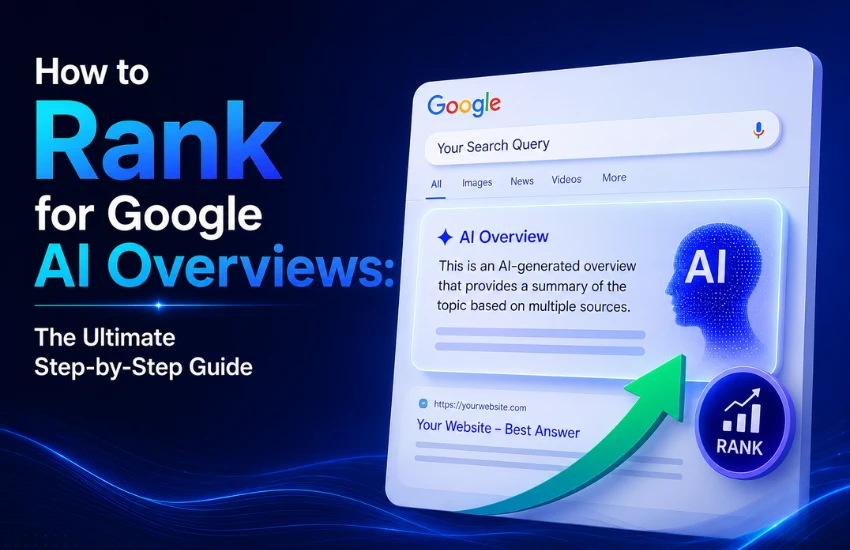
How to Rank for Google AI Overviews: The Ultimate Step-by-Step Guide

Introduction

Search has changed – and if you have not noticed yet, your traffic numbers probably have.

Google AI Overviews (formerly Search Generative Experience or SGE) now appear at the very top of search results for millions of queries every day. Instead of clicking on blue links, users read an AI-generated summary and either leave satisfied or click one of the cited sources.

Here is the opportunity: if your content gets cited inside an AI Overview, you earn a prominent visibility boost that no paid ad can buy. In fact, pages cited in AI Overviews can see click-through rate lifts of up to 35%.

This guide walks you through every step – from understanding what AI Overviews actually are, to structuring your content, building authority, and measuring your results. Let us begin.

Step 1 – Understand What Google AI Overviews Are

What Are Google AI Overviews?

Google AI Overviews are AI-generated summaries that appear at the top of search results pages. They are powered by Google’s Gemini models, which read multiple web sources, analyze context, and produce a consolidated answer – along with links to the sources they used.

They are designed to help users get the gist of a topic quickly, especially for complex or multi-part questions.

Why This Matters for SEO

Key Stat

Google AI Overviews now appear in roughly 13% of all searches – up from about 6.5% earlier in 2025. Queries with eight or more words are 7 times more likely to trigger an AI Overview.

Here is what this shift means practically:

  • The top organic result loses up to 34.5% of its click-through rate when an AI Overview appears above it.
  • You cannot buy your way into an AI Overview. There is no ad slot. The only way in is through earned authority and well-structured content.
  • AI Overviews appear heavily on mobile – where roughly two-thirds of all Google searches happen.

The bottom line: ranking in AI Overviews is the new position zero. It sits above featured snippets, ads, and all organic results combined.

Step 2 – Build a Strong SEO Foundation First

Before you optimize specifically for AI Overviews, your base SEO must be solid. Google’s AI pulls only from content it already trusts and has indexed.

Technical SEO Checklist

  1. Indexing – Open Google Search Console and confirm your key pages are indexed and visible in search results.
  2. Page speed – Pages that load slowly get passed over. Aim for a Core Web Vitals score in the green range.
  3. Mobile-friendliness – Given that most AI Overview queries come from mobile devices, a responsive design is non-negotiable.
  4. Clean URL structure – Use short, descriptive URLs that include your target keyword.
  5. Internal linking – Connect related pages so Google can understand the depth and breadth of your topical coverage.
  6. Descriptive alt text – Optimize image alt text with keywords to add additional context signals.
Quick Tip

Run a crawl using a tool like Screaming Frog or Ahrefs Site Audit before you start content optimization. Fix crawl errors and redirect chains first – they silently block AI visibility.

Step 3 – Target the Right Keywords

Focus on Conversational and Long-Tail Queries

AI Overviews are triggered most often by longer, question-based queries – the kind of searches that start with ‘how,’ ‘what,’ ‘why,’ or ‘best way to.’ These are the keywords you want to prioritize.

How to Find the Right Keywords

  • Use Google’s ‘People Also Ask’ box to find real questions your audience is typing.
  • Look at ‘Related Searches’ at the bottom of the SERP for additional query ideas.
  • Use keyword research tools like Ahrefs, SEMrush, or Google Keyword Planner to filter for long-tail, question-based terms.
  • Search your target topic in Google and manually note which queries already show AI Overviews – these are your priority targets.

Step 4 – Write Content That Directly Answers Questions

Lead with the Answer

The single most important rule for AI Overview optimization: put the most important information first.

Write your main answer in the first two to three sentences of every section. Do not make readers scroll to find the point. Google’s AI reads the top of your content first – and so do your users.

Use Simple, Conversational Language

Write like you are explaining something to a smart friend, not writing an academic paper. Avoid jargon where possible. Use short sentences. Break complex ideas into short paragraphs of two to four lines.

A useful test: read your opening paragraph aloud. If it sounds unnatural, rewrite it.

Use Clear Headings That Match Search Queries

Your H2 and H3 headings should reflect the actual questions people type into Google.

Instead of a generic heading like ‘Benefits of Content Marketing,’ try ‘How Does Content Marketing Help a Business Grow?’ Question-based headings match user intent precisely and are far more likely to be picked up by AI Overviews.

Include a Key Takeaways Section

Add a short ‘Key Takeaways’ or ‘Quick Summary’ section near the top or end of your article. AI Overviews often pull from pre-summarized content because it is already formatted for quick extraction.

Pro Tip

After you search your target keyword, read the existing AI Overview carefully. Notice the structure it uses – how many points it covers, what kind of language it favors, and whether it uses steps, bullets, or paragraphs. Then rewrite your content to match that structure in your own voice. This is the same logic as ‘featured snippet theft’ – but applied to AI Overviews.

Step 5 – Optimize Content Structure for AI Extraction

AI systems do not read content the way humans do. They scan for structured, clearly organized information they can extract and reuse. Your job is to make that extraction as easy as possible.

Use Structured Formatting

  • Use numbered lists for step-by-step processes (like this guide).
  • Use bullet points for features, tips, or comparisons.
  • Use tables for comparisons or data sets.
  • Use short paragraphs – two to four sentences maximum per paragraph.
  • Use subheadings to break up every major section.

The First Sentence Rule

If someone only reads the first sentence under each heading, they should walk away with the core message of that section. Front-load your most important point in every heading introduction.

Add FAQ Sections

FAQ sections are one of the highest-impact strategies for AI Overview citations. Here is why: AI Overviews often pull directly from FAQ-style content because it is already pre-formatted as a question and answer. The AI does almost no extra processing.

To build an effective FAQ section:

  1. Include five to eight focused questions that your target audience actually searches for.
  2. Use Google’s ‘People Also Ask’ box to source real questions.
  3. Keep each answer between 40 and 80 words – concise but complete.
  4. Place your FAQ near the bottom of the article, after the main content.

Step 6 – Build E-E-A-T and Topical Authority

E-E-A-T stands for Experience, Expertise, Authoritativeness, and Trustworthiness. It is the framework Google uses to evaluate whether a source is reliable enough to cite – especially in AI-generated responses.

After Google’s December 2025 Core Update, E-E-A-T rigor was extended across all content categories – not just health and finance. Today, 96% of AI Overview citations come from verifiably authoritative sources.

How to Strengthen Your E-E-A-T Signals

  • Add author bio pages with real credentials, work history, and social profiles.
  • Include first-hand experience in your content – personal case studies, test results, client outcomes.
  • Cite reputable external sources – studies, industry reports, recognized experts.
  • Display trust signals on your website – client reviews, case studies, certifications, press mentions.
  • Keep content fresh and updated – add a ‘Last Updated’ date to articles and revisit them regularly.
  • Link out to authoritative sources (government sites, academic papers, recognized publications).

Build Topical Authority with Content Clusters

Google’s AI is more likely to cite sources it recognizes as comprehensive authorities on a topic. A single article is rarely enough. You need a content cluster.

A content cluster works like this:

  1. Choose a core topic – for example, ‘local SEO for service businesses.’
  2. Write a pillar article – a long, comprehensive guide targeting the main keyword.
  3. Write supporting cluster articles – shorter, focused posts on related subtopics (e.g., ‘how to optimize a Google Business Profile,’ ‘best local citation sources in India’).
  4. Link everything together – your pillar links to all cluster articles, and each cluster article links back to the pillar.

Together, these articles signal to Google that your site is a trusted, comprehensive resource on the topic – exactly the kind of source AI Overviews are built to cite.

Step 7 – Implement Schema Markup (Structured Data)

Why Schema Markup Matters for AI Overviews

Schema markup is code you add to your pages to help Google understand exactly what your content is about – in a machine-readable format. For AI Overviews, schema acts as a direct translation layer between your content and the AI.

Key Stat

Pages with properly implemented schema markup have a 2.5x higher chance of appearing in AI-generated answers. Sites with complete schema coverage see up to 40% more AI Overview appearances.

Schema Types to Prioritize

  • FAQPage – For any page that answers multiple user questions. FAQPage schema has a 67% citation rate in AI responses for relevant queries.
  • Article / BlogPosting – For all editorial content. Include headline, author, and publication date.
  • HowTo – For step-by-step guides and tutorials.
  • Organization / Person – Reinforce your site’s credibility and E-E-A-T signals.
  • BreadcrumbList – Helps AI understand your site structure.

Implementation Tips

  1. Use JSON-LD format – it is preferred by all major AI systems because it is clean and easy to parse.
  2. Place schema in the <head> section of your HTML for reliable loading.
  3. Match your schema to the visible content on the page exactly – mismatches can get your content penalized or ignored.
  4. Layer complementary schema types – pages combining Article + FAQPage + BreadcrumbList get cited up to 2x more often than pages with just one schema type.
  5. Validate using Google’s Rich Results Test or Schema.org validator before publishing.
Remember: Schema markup improves your chances but does not guarantee inclusion. Content quality and authority always come first.

Step 8 – Earn Quality Backlinks and Brand Mentions

Off-page authority still matters. Google’s AI draws from sources that the broader web recognizes as trustworthy – and backlinks are one of the clearest signals of that trust.

Link Building for AI Overview Visibility

  • Guest post on industry-relevant, high-authority websites.
  • Get mentioned in roundup articles, expert interviews, and research studies.
  • Build relationships with journalists and bloggers in your niche (digital PR).
  • Create link-worthy assets – original research, data studies, free tools, or comprehensive guides.
  • Submit to relevant directories and niche-specific citation sources.

Brand Mentions Count Too

Even unlinked brand mentions signal to Google that your brand is recognized and talked about. Encourage reviews, case study features, and community discussions that reference your business name and website.

Step 9 – Monitor, Measure, and Improve

Ranking in AI Overviews is not a one-time fix. Google’s AI is continuously learning and updating which sources it trusts. You need a regular review cycle.

Tools to Track AI Overview Performance

  • Google Search Console – Check impressions, clicks, and CTR for your target queries. If a page is getting impressions but low clicks, it may already be appearing in AI Overviews but not earning the click.
  • BrightEdge or Semrush – Enterprise-level tracking for AI Overview appearances by keyword.
  • Manual SERP checks – Search your target keywords regularly. Note when your content appears as a cited source inside an AI Overview.
  • Google Analytics 4 – Track changes in organic traffic and engagement after content updates.

Regular Content Review Cycle

  1. Set a monthly review schedule for your top-performing pages.
  2. Update statistics, examples, and information that may have become outdated.
  3. Add ‘Last Updated’ dates to signal freshness to both users and Google.
  4. Search your target keywords and analyze what the current AI Overview says – then update your content to fill any gaps.
  5. Check if new ‘People Also Ask’ questions have appeared for your topic and add them to your FAQ section.

Quick Reference – AI Overviews Optimization Checklist

Use this checklist to audit your content before publishing or during monthly reviews:

Content

  • Main answer placed in the first two to three sentences of the page or section
  • Question-based H2 and H3 headings used throughout
  • FAQ section with five to eight focused questions and concise answers (40-80 words each)
  • Key Takeaways or Quick Summary section included
  • Simple, conversational language – no unnecessary jargon
  • Short paragraphs – two to four lines maximum

Technical SEO

  • Page indexed and confirmed in Google Search Console
  • Core Web Vitals in the green range
  • Mobile-friendly design
  • Schema markup implemented and validated (FAQPage, Article, HowTo as relevant)
  • Internal links connecting related content

Authority

  • Author bio with real credentials and links to profiles
  • First-hand experience or case study data included
  • External links to reputable sources
  • Trust signals visible on the page (reviews, certifications, press mentions)
  • Content updated within the last six months

Off-Page

  • Backlinks from relevant, high-authority domains
  • Brand mentions across the web
  • Active presence on authoritative third-party platforms

Final Thoughts

Google AI Overviews represent a fundamental change in how people interact with search results. The websites that adapt now – by building real authority, structuring content for AI extraction, and optimizing their technical signals – will own a disproportionate share of visibility as AI-driven search continues to grow.

The good news: none of these steps require new tactics invented for AI. They are the same principles that have always mattered in SEO – helpful content, clear structure, genuine authority, and consistent improvement. AI Overviews simply enforce these principles more strictly than ever before.

Start with one page. Apply the checklist from Step 9. Measure your results. Then repeat across your content library.

Need Help Implementing These Strategies?

WEBOPTECH Solutions Pvt. Ltd specializes in SEO strategies built for the AI-first search era. Visit www.weboptech.com to learn how we can help your business earn visibility in Google AI Overviews and beyond.

Categories:

AI Tools Google Ads SEO

Tags:

No tags
Google Ads mistakes silently draining your marketing budget
09Jul

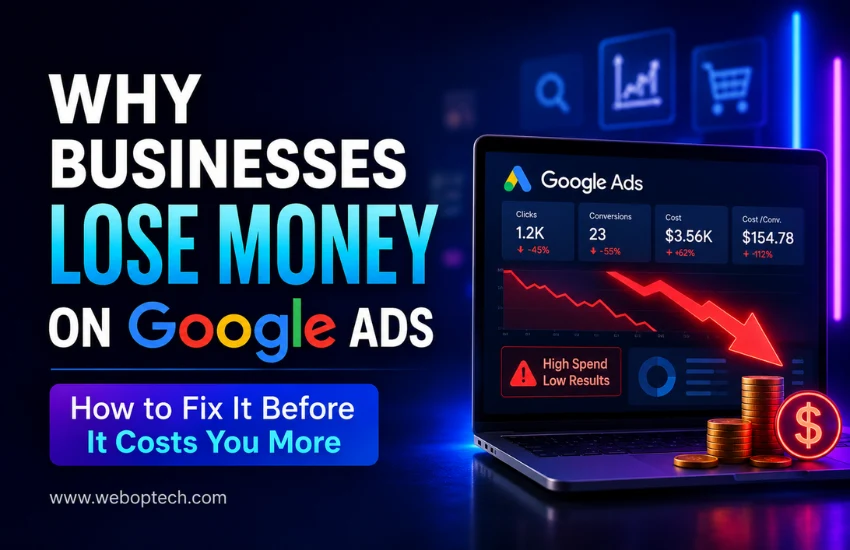
Why Businesses Lose Money on Google Ads

How to Fix It Before It Costs You More

Let me be direct with you.

Google Ads is one of the most powerful digital advertising platforms in the world. After auditing countless Google Ads accounts – across industries, budgets, and business sizes – the same patterns show up every single time. Businesses are not losing money because Google Ads does not work. They are losing money because of entirely avoidable Google Ads mistakes that quietly drain budgets week after week.

The frustrating part? Most of these mistakes are not obvious. Everything looks fine on the surface – the campaigns are running, the clicks are coming in, the dashboard shows activity. But the conversions are missing, the CPCs are bloated, and the ROI simply does not add up.

What follows is not a beginner’s guide to Google Ads. It is a breakdown of the real reasons accounts underperform – and what needs to change to fix them.

 1. No Goal, No Direction – And Google Will Spend Anyway

This is the first thing I look for when I open an account audit. What is this campaign actually trying to achieve?

More often than not, the campaign was launched without a clearly defined conversion action. No form tracking. No call tracking. No purchase event. Just ‘get more clicks’ – which Google is happy to deliver, at full cost, with zero accountability for results.

Google’s algorithm is not your business partner. It will optimise for whatever signal you give it. If you give it no signal, it optimises for spend. Your budget gets used – just not in your favour.

What to do:

  • Before a single campaign goes live, define the primary conversion action. 
  • Set it up in Google Ads. 
  • Verify it is firing correctly. 
  • Every optimisation decision after that should trace back to this one number.

2. Keyword Strategy Built on Volume, Not Intent

Here is what I see constantly – accounts bidding on high-volume keywords because they look impressive in Keyword Planner. Thousands of monthly searches. Broad match. Let it run.

The problem is that volume does not equal intent. A keyword with 50,000 monthly searches might contain researchers, students, competitors, and casual browsers – none of whom are your buyers. Meanwhile, a tighter, intent-driven keyword with 800 searches might be converting at 12%.

Bidding without intent analysis is how businesses burn through budget in the first two weeks of a campaign and then conclude that ‘Google Ads does not work for our industry.

What separates converting keywords from expensive noise:

  •  Commercial and transactional intent – people ready to act, not just explore
  •  Long-tail phrases that reflect specific, purchase-ready queries
  • Proper match type selection – phrase and exact match give you control
  • Separate ad groups for each tightly themed keyword cluster

What to do:

  • Build your keyword list around buyer intent, not search volume. 
  • Think about what someone types when they are ready to pay – not when they are just looking. 
  • That distinction alone will change your results.

3. The Negative Keyword List Is Either Empty or Never Updated

I have seen accounts spending 30 to 40 percent of their budget on irrelevant searches – simply because nobody reviewed the Search Terms Report.

This is one of the most consistently neglected areas in Google Ads management. Negative keywords are not a one-time setup task. They are an ongoing discipline. Search behaviour shifts. New irrelevant queries emerge. If you are not actively blocking them, you are paying for them.

A B2B software company bidding on ‘project management tool’ might be showing ads for ‘free project management tool for students’ or ‘project management tool meaning’ – searches with zero commercial value.

What to do:

  • Block irrelevant searches at the account level. 
  • Review the Search Terms Report every week without exception. 
  • Build a master negative keyword list from day one and keep adding to it. 
  • This single habit protects more budget than almost any other optimisation.

4. Ad Copy That Blends Into the Background

Most Google Ads copy is forgettable. Same headlines, same structure, same generic calls to action. ‘Quality Service.’ ‘Trusted by Thousands.’ ‘Contact Us Today.’ None of it gives the searcher a reason to choose you over the ad above or below yours.

Here is the truth about ad copy – it is not creative writing. It is a direct response to a specific search query. The person searching has a problem. Your ad needs to reflect their exact problem, offer a specific solution, and give them a clear next step. In three headlines and two descriptions.

What weak ad copy looks like in practice:

  • Headlines that repeat the keyword without adding value or differentiation
  • No mention of a key offer – discount, guarantee, turnaround time, free consultation
  • Calls to action that are vague – ‘Learn More’ when ‘Get Your Free Quote in 24 Hours’ is available
  • Ad messaging that does not match what the landing page says

What to do:

  • Write ads that answer the searcher’s specific question and offer a concrete next step. 
  • Use all available ad extensions. 
  • Run at least two or three ad variants per ad group at all times and let data decide the winner – not instinct.

5. Sending Paid Traffic to a Page That Was Not Built to Convert

This is where I see the most silent budget waste. The campaign looks reasonable. The CTR is decent. But conversion rates are sitting at under 1 percent, and nobody is asking why.

The landing page is the problem. It is slow. It loads differently on mobile. The headline does not match the ad. The form asks for too much information. There is no clear trust signal. The call to action is buried below the fold.

You can have the most precisely targeted, perfectly written ad in the account – but if it sends traffic to a weak page, every click is a waste.

Red flags I check immediately in a landing page audit:

  • Load time above 3 seconds on mobile – a conversion killer in every vertical
  • Headline mismatch – the ad said one thing, the page says something different
  • No single, dominant call to action above the fold
  • Generic page used for multiple campaigns with conflicting messaging
  • No social proof – testimonials, certifications, client logos, case studies

What to do:

  • Create dedicated landing pages for each campaign theme. 
  • Match the ad’s promise exactly on the page. 
  • Keep the focus narrow – one page, one goal, one action. 
  • Test load speed using Google PageSpeed Insights and fix what it flags.

6. Bidding Strategy Chosen for Convenience, Not Performance

Choosing a bidding strategy because it sounds automated and easy is one of the fastest paths to budget waste. Smart Bidding is powerful – but only when it has enough data to work with.

Launching a brand-new campaign with Target CPA or Target ROAS and expecting the algorithm to optimise immediately is a misunderstanding of how machine learning works. Google needs conversion history – typically 30 to 50 conversions per month – before Smart Bidding can make reliable decisions. Before that threshold, it is essentially guessing.

Equally, using Maximise Clicks on a campaign where quality matters over volume will flood you with cheap, irrelevant traffic that looks good in reports and delivers nothing in the pipeline.

What to do:

  • Start new campaigns on Manual CPC or Enhanced CPC. 
  • Build conversion data for 4 to 6 weeks. 
  • Once you consistently hit 30-plus conversions per month, transition to Target CPA or Target ROAS. 
  • Match the strategy to where the campaign actually is – not where you want it to be

7. Conversion Tracking That Is Broken, Incomplete, or Never Verified

This one surprises people when I bring it up in audits – because most accounts technically have conversion tracking set up. The issue is that it is either tracking the wrong thing, double-counting, or firing inconsistently.

I have seen accounts where ‘conversions’ were being counted every time someone visited the thank-you page – including the advertiser refreshing the page during testing. The conversion data looked great. The actual sales pipeline told a completely different story.

Without clean, verified conversion data, every optimisation decision in the account is built on a faulty foundation. Bidding strategies, budget allocation, keyword prioritisation – all of it depends on the accuracy of what you are measuring.

What to do:

  • Audit your conversion tracking before trusting any data in the account. 
  • Use Google Tag Assistant to verify tags are firing correctly. 
  • Track every meaningful action – form submissions, calls, purchases, live chat engagements. 
  • Link Google Ads to Google Analytics 4 for cross-platform visibility.

8. Campaigns Left Running Without Regular Optimisation

Google Ads rewards attention. Accounts that are reviewed, tested, and refined consistently outperform accounts that are launched and left alone – even when the initial setup is identical.

Ad fatigue is real. Competitor bids shift. Seasonal behaviour changes. Search trends evolve. A campaign that performed well in January may be underperforming by March for reasons that only become visible through regular review.

What gets missed when accounts are not actively managed:

  • Underperforming keywords continuing to consume budget without results
  • Ad variants that stopped performing months ago still running unchanged
  • Bid adjustments not updated for device, location, or time-of-day performance shifts
  • Quality Scores declining due to stale ad copy and unchanged landing pages

What to do:

  • Build a fixed weekly review into your process. 
  • Check CTR, conversion rate, cost per conversion, Quality Score, and impression share every week. 
  • Pause what is not working. 
  • Test something new every two weeks. 
  • Small, consistent optimisations compound into significant performance gains over time.

9. Budget Spread Too Thin Across Too Many Campaigns

More campaigns do not mean more results. In fact, the opposite is usually true.

When a limited budget is distributed across too many campaigns or ad groups, no single element accumulates enough data to optimise, enough impressions to build Quality Score, or enough conversions to feed Smart Bidding effectively. Everything runs at a fraction of its potential.

I regularly see accounts with a monthly budget of twenty to thirty thousand rupees split across eight campaigns – each one starved of the spend it needs to gain meaningful traction. The result is mediocre performance everywhere, standout performance nowhere.

What to do:

  • Consolidate. Identify your highest-intent, highest-converting campaigns and concentrate budget there. 
  • A focused account with two or three well-funded, tightly structured campaigns will consistently outperform a fragmented account spread across many. Scale what works – do not dilute it.

Account Audit Checklist – 9 Things to Fix First

The Problem The Fix
No conversion tracking goal Define primary action before campaign launch
Keywords chosen by volume Rebuild around buyer intent, not search volume
Negative keywords neglected Review Search Terms Report weekly – no exceptions
Generic, forgettable ad copy Create specific, benefit-led headlines with tested variants
Weak or mismatched landing page Use dedicated pages with matching messaging and fast load time
Wrong bidding strategy Start with Manual CPC, then move to Smart Bidding after enough data
Broken or unverified tracking Audit conversion tags before trusting campaign data
No active optimisation Review weekly – pause, test, adjust, and repeat
Budget too diluted Consolidate campaigns and invest in top performers

The Bottom Line

Google Ads works. That is not the question.

The question is whether the account running those ads is set up to let the platform perform – or set up to quietly waste budget while delivering the appearance of activity. Every mistake in this article has a fix. None of them require a larger budget. They require the right structure, the right measurement, and consistent attention to what the data is actually saying.

The businesses that win on Google Ads are not the ones spending the most. They are the ones managing their accounts with discipline, testing with intent, and optimising based on real conversion data – not impressions and clicks.

That is the standard every account should be held to.

Need a Google Ads Account Audit?

At WEBOPTECH Solutions Pvt. Ltd, our Google Ads experts help businesses uncover wasted ad spend, improve campaign efficiency, and generate more qualified leads. If your campaigns are generating clicks but not results, we’ll identify exactly where your budget is being wasted and provide a clear roadmap to improve performance.

Visit www.weboptech.com to learn more or request a consultation.

Related Guides You May Find Useful:

👉 Google Ads vs Meta Ads: Which is Better for Your Hospital or Clinic in 2026?
👉 Google Advertiser Verification: Complete Step-by-Step Guide
👉 How Google AI Mode is Changing Paid Search Campaigns in 2026

Tags:

No tags
How AI Mode Transforms Paid Search Marketing
27Jun

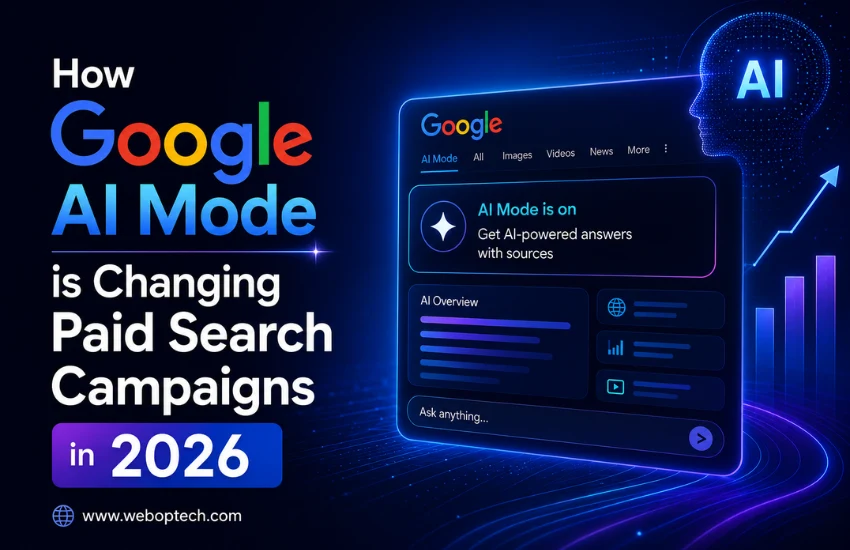
How Google AI Mode is Changing Paid Search Campaigns in 2026

Introduction: The Search Landscape Has Shifted

If you are running paid search campaigns in 2026 and still relying on strategies from 2022 or 2023, you are likely leaving performance – and budget – on the table. Google AI Mode is not a minor update. It is a fundamental restructuring of how search works, how users interact with results, and how advertisers earn visibility.

Understanding the mechanics of this shift is no longer optional for digital marketers. This guide breaks down what Google AI Mode is, how it is reshaping paid search campaigns, what the data tells us, and what strategic moves you need to make right now.

Key Points
Google AI Mode has surpassed 1 billion monthly users globally and handles over 1 billion queries every month, making it one of the fastest-adopted search interfaces in Google’s history.

1. What is Google AI Mode – and Why Does It Matter?

Google AI Mode transforms traditional search from a “10 blue links” experience into a conversational, AI-generated response environment. Instead of presenting a list of websites, Google synthesizes information from across the web and delivers a direct, structured answer inside the search results page itself.

There is a critical distinction between two AI-powered surfaces that every marketer needs to understand:

AI Overviews vs. AI Mode – Not the Same Thing

Feature AI Overviews AI Mode
Organic results visible? Yes – AI summary sits on top No – fully conversational, no organic list
User behavior Modifies existing search flow Replaces traditional search entirely
Query share affected ~48% of all queries (2026) Growing – rapidly shifting user base
Ad placement 25.5% of AI Overview SERPs Active experiments – imminent ad launch
Biggest risk Organic click loss Full elimination of organic SERP for engaged users


A January 2026 update now lets users jump directly from AI Overviews into AI Mode conversations, creating a pipeline that moves users from modified search into a fully AI-native experience. For advertisers, this means the surface where your ads appear is evolving – fast.

2. The Data Picture: AI Mode Growth in Numbers

Before adjusting strategy, it helps to understand the scale and speed of adoption. Here is what the data shows:

Metric Figure Context
AI Mode daily active users 75 million+ As of late 2025, growing 4x since May 2025 launch
Monthly active users 100 million+ Across US and India markets
Monthly query volume 1 billion+ Processed through AI Mode infrastructure
Ads in AI Overview SERPs 25.5% Up 394% year-over-year
AI-referred traffic conversion rate 1.3% (up 55%) Fewer but higher-intent clicks (Contentsquare, 2026)
Organic search traffic change -9% year-over-year AI surfaces filtering lower-intent visits
Google Search revenue (Q1 2026) $60.4 billion +19% YoY – Alphabet Q1 2026 earnings
Google Network revenue (Q1 2026) $6.97 billion -4% YoY – open web losing ground


Strategic Insight
Fewer visits do not automatically mean weaker demand. AI Mode is filtering out lower-intent research visits while preserving – and even concentrating – high-intent buying traffic. The conversion quality is improving even as raw click volume may decline.

3. How AI Mode is Changing Paid Search Campaigns

3.1 The Auction Has Changed

Traditional paid search was built on a clear, keyword-driven auction: a user types a query, ads compete for placement, and marketers measure impressions, clicks, and conversions. AI Mode complicates that entire flow.

Users can now ask longer, more nuanced questions, refine their answers conversationally, compare options, and move closer to a purchase decision – all without returning to a standard search results page. The linear path from query to click to conversion has become a multi-turn conversation.

What this means for advertisers:

  • Keyword-level targeting becomes less precise as queries become longer and more conversational
  • Impression share metrics may drop even when ad spend stays the same
  • The user’s decision-making journey now happens partly inside Google’s own AI interface
  • Attribution models built on last-click logic are becoming significantly less reliable

3.2 New Ad Placements – and New Campaign Types

Google has significantly expanded ad eligibility within AI surfaces. As of 2026, the following campaign types can qualify for AI Overview and AI Mode placements:

Campaign Type AI Mode Eligibility Key Consideration
Performance Max (PMax) Yes – automatic eligibility Review placement reports for AI-related impressions
AI Max for Search Yes – primary vehicle for AI placements Auto-upgraded from DSA, broad match & ACA in Sept 2026
Broad Match Search Campaigns Yes Monitor for expanded query matching in AI surfaces
Shopping Campaigns Yes Feed quality and product data become critical signals
Standard Search (Exact/Phrase) Limited – reduced AI surface reach May miss AI Mode placements without AI Max enabled


Important: Auto-Upgrade Alert
Starting September 2026, Google will automatically upgrade Dynamic Search Ads (DSA), automatically created assets (ACA), and campaign-level broad match settings to AI Max. New DSA creation has already been discontinued. Audit your campaigns now to avoid unexpected changes to your targeting and spend.

3.3 AI Max for Search – Opportunity and Risk

AI Max for Search is Google’s primary mechanism for connecting ads to AI-driven search experiences. It goes beyond keyword-based campaigns by using intent signals to serve ads in AI Overview and AI Mode environments. However, performance data from independent testing paints a nuanced picture:

  • Across 23 AI Max tests, accounts using all three AI Max features together outperformed those using single features
  • Text customization lifted ad relevance and Quality Score in the majority of tests
  • 84% of advertisers saw neutral or negative AI Max outcomes in independent testing when measured at account level
  • Gains were smaller at account level than campaign level – much of the “new” traffic was cannibalized from existing campaigns rather than representing net-new demand
  • Cheaper clicks were observed in some accounts, but with fewer conversions and higher cost per lead

Bottom line: AI Max can work – but it is very easy to misread performance gains. Broad reach can mask weaker buyer intent. Always measure incrementality, not just aggregate campaign-level improvement.

4. SEO and Paid Search Are No Longer Separate Conversations

One of the most significant strategic shifts of the Google AI Mode era is this: the traditional separation between SEO and paid search strategy no longer holds.

AI Mode’s ad placements and AI Overview citations are both heavily influenced by the same underlying factors – the quality, structure, and authority of your website content. Specifically:

  • AI Mode synthesizes answers from structured, crawlable, high-quality content
  • Ad eligibility in AI surfaces depends on landing page quality and content relevance
  • Your brand’s presence in AI-generated organic answers directly influences the trust signals that affect your paid ad performance
  • Conversion tracking cleanup is essential – AI Mode ad formats and Performance Max rely heavily on conversion signal quality
The Right Frame
Stop treating organic, paid, and AI search as separate channel conversations. Total SERP visibility – how your brand appears across all three surfaces simultaneously – is now the correct framework for planning and reporting search strategy.

5. Strategic Recommendations for Paid Search in 2026

5.1 Audit Your AI Surface Exposure

Before making any changes, understand where your ads are currently appearing in AI surfaces and what share of your spend is going there.

  • Review placement reports in Google Ads for AI-related impressions and clicks
  • Check what percentage of your current ad spend is allocated to AI placements vs. traditional search results
  • Identify which campaigns are already eligible for AI Overview placements through PMax or broad match

5.2 Rebuild Your Bidding Strategy Around Intent Signals

Smart bidding driven by intent signals – not just keywords – is becoming the standard in an AI-first search environment. Keyword-level control is diminishing; signal quality is everything.

  • Invest in first-party data infrastructure – clean CRM data, audience lists, and customer match audiences
  • Set up conversion tracking that reflects actual business outcomes, not just form fills or page views
  • Use tROAS and tCPA bidding strategies that can optimize across the full AI-influenced funnel
  • Avoid over-restricting with negative keywords – this limits the benefits of intent-based targeting in AI surfaces

5.3 Prioritize Landing Page and Feed Quality

AI Mode and AI Max placements both depend on structured, accurate, and clearly relevant landing pages and product feeds. Poor landing page quality is a disqualifying factor.

  • Rebuild key landing pages around specific, discrete questions your target users ask – not just keyword density
  • Ensure product feeds are complete, accurate, and updated for Shopping campaigns
  • Use schema markup to help Google’s AI systems understand your content context
  • Content restructured around named sources, concrete claims, and factual answers performs better in AI surfaces

5.4 Diversify Beyond Google’s Owned Surfaces

Alphabet’s Q1 2026 earnings told a clear story: Google’s owned surfaces are growing while the open web contracts. Smart advertisers are responding by building presence across multiple channels that work alongside – and outside – AI search.

  • YouTube: increasingly important as AI Mode drives users toward video-format answers
  • Paid social: essential for upper-funnel discovery as AI search compresses the research phase
  • Connected TV (CTV): growing channel for brand awareness that feeds into AI-influenced search intent
  • Marketplace advertising (Amazon, Flipkart): critical for e-commerce brands whose organic visibility in AI surfaces is under pressure

5.5 Monitor AI Mode Impact With a Dedicated Dashboard

Standard aggregate reporting will not show you the full picture of AI Mode’s impact on your campaigns. You need a more granular view.

  • Track CTR gaps by intent type – navigational, informational, and transactional queries are impacted differently
  • Monitor impression-to-click trends weekly rather than monthly to catch shifts early
  • Segment branded vs. non-branded search terms and tag by intent to identify where AI Mode is creating gaps
  • Compare year-over-year conversion volume vs. year-over-year click volume – if conversions hold but clicks drop, AI Mode is filtering intent positively

6. What Google I/O 2026 Told Us About the Direction of Travel

Google’s I/O 2026 announcements made the platform’s strategic direction unmistakably clear. Gemini-based tools now span campaign creation, creative development, measurement, reporting, and commerce. Key announcements relevant to paid search advertisers include:

  • Ask Advisor: AI-powered campaign recommendations built directly into the Google Ads interface
  • Asset Studio: Gemini-powered creative generation for ads, reducing reliance on manually produced assets
  • AI Search ad experiences: New ad formats designed specifically for AI-native search environments
  • Agentic commerce infrastructure: Google is building the capacity for AI to complete purchases on behalf of users – a major shift for transactional paid search

The direction is clear: Google is automating more of the advertising workflow with every update. The advertisers who will win are those who learn to work strategically with these systems – feeding them the right signals, creative, and data – rather than fighting against automation or ignoring it.

7. Quick Reference: AI Mode Paid Search Checklist for 2026

Priority Action Item
Critical Audit AI surface placement reports in Google Ads
Critical Review and clean up conversion tracking
Critical Understand AI Max auto-upgrade timeline (Sept 2026)
High Build or refresh first-party data and audience lists
High Rebuild landing pages around question-based, structured content
High Set up a weekly AI Mode impact monitoring dashboard
High Update product feeds for Shopping and AI surface eligibility
Medium Diversify budget allocation to YouTube, social, and CTV
Medium Review branded campaign settings and AI Max inclusion lists
Medium Align SEO and paid search teams on total SERP visibility goals

Conclusion: Adapt Now – The Window is Open

Google AI Mode is not a future threat to paid search – it is a present reality reshaping how search works, how users behave, and how ad budgets are deployed. The data is clear: AI Mode is growing at extraordinary speed, ad visibility in AI surfaces is expanding, and the traditional keyword-driven paid search playbook needs a significant update.

The good news is that the structural fundamentals of effective advertising still apply: strong signals, quality creative, relevant landing pages, and clear conversion tracking. The marketers who adapt these fundamentals to an AI-first search environment will be best positioned to maintain – and grow – performance in 2026 and beyond.

The window to adapt proactively is open. The advertisers who move now will have a significant advantage over those who wait for their performance metrics to force the change.

About WEBOPTECH Solutions Pvt. Ltd
WEBOPTECH Solutions Pvt. Ltd is a full-service digital marketing agency specializing in Answer Engine Optimization (AEO), Generative Engine Optimization (GEO), SEO, paid search, social media, website design and development, and performance marketing strategies. We help businesses navigate evolving search landscapes with data-driven, results-focused campaigns. Visit us at www.weboptech.com

Discover More Topics You May Find Helpful:

👉 SEO vs Google Ads: Which One Drives Sales Quicker for Small Businesses?
👉 10 Best AI Tools for Social Media Marketing in 2026 (Boost Reach & Save Time)
👉 Google Ads vs Meta Ads: Which is Better for Your Hospital or Clinic in 2026?
👉 Google Advertiser Verification: Complete Step-by-Step Guide (2025 Updated)

Tags:

No tags
Grow your business online in 2026 tips
02Jun

10 Ways to Grow Your Business Online in 2026

The digital landscape has never moved faster. Businesses that thrived in 2023 are struggling to stay visible today – not because their product changed, but because the online world around them did. At WEBOPTECH Solutions, we work every day with brands trying to answer one question: How do we actually grow your business online in 2026? This guide is the answer – built from real campaigns, real data, and results our clients have seen across industries.

Note: Growing a business online in 2026 is not about doing everything. It is about doing the right things consistently. Start with two or three strategies from this list and master them before expanding.

Quick Strategy Overview

Strategy Main Goal Expected Result Difficulty Level
SEO Website Better visibility More organic traffic Medium
Local + Semantic SEO Targeted reach Quality leads Medium
Content Marketing Authority building Long-term growth Medium
Paid Ads Quick conversions Instant leads High
Social Media Brand awareness Engagement + reach Medium
Email Marketing Customer retention High ROI Low
Reputation Management Trust building Higher conversions Low
AI Tools Efficiency Faster scaling Medium
Influencer Marketing Audience trust Niche conversions Medium
Analytics & Tracking Data insights Better decisions Low

1. Build a High-Performance, SEO-Optimized Website

Your website is your most valuable digital asset. A slow, outdated site loses customers before they even read your offer. In 2026, Core Web Vitals are non-negotiable – Google rewards sites that load fast, respond instantly on mobile, and deliver a seamless experience. Invest in a site that converts, not just one that looks good.

Key Focus Areas

Prioritize mobile-first design, achieve sub-3-second page speed, use clear call-to-actions (CTAs), and implement structured data markup to improve search visibility and user experience.

2. Prioritize Local and Semantic SEO

Search intent has evolved. People are not just typing keywords – they are asking full questions. Semantic SEO means creating content that answers real questions your audience is asking.

Pair this with local SEO – optimized Google Business Profile, location-based keywords, and consistent NAP data – and you build authority that drives foot traffic and online leads simultaneously.

If you are unsure where to focus your budget for faster results, explore our guide on SEO vs Google Ads for small businesses to make a smarter decision.

3. Invest in Content Marketing That Solves Problems

Generic content does not rank. Problem-solving content does. Map every blog post, guide, or video to a specific pain point your customer has. When your content becomes the answer to their problem, Google notices – and so do your prospects.

A solid content marketing strategy in 2026 includes:

  • Long-form guides (1,000+ words)
  • Video content
  • FAQs
  • Consistent publishing

Brands that post 3–4 times per week see 3.5x more traffic than those that post occasionally.

4. Use Paid Ads Strategically – Not Broadly

Running ads without targeting is like broadcasting on a frequency no one listens to. In 2026, Google Ads and Meta Ads require tight audience segmentation, compelling creative, and data-driven bidding strategies. Use retargeting to re-engage warm audiences and focus budget on high-intent keywords that convert – not just keywords that generate clicks.

Before scaling your ads, make sure your account is properly verified and compliant: 👉 Google advertiser verification step-by-step guide

A WEBOPTECH-managed ad campaign consistently achieves 3x-5x ROAS for clients in competitive verticals because we eliminate wasted spend from day one.

5. Dominate Social Media With Purpose-Driven Content

Social media in 2026 rewards specificity. A brand that stands for something specific grows faster than one that posts everything. Define your content pillars – education, behind-the-scenes, testimonials, industry insights – and show up consistently on the platforms where your audience actually spends time.

Short-form video on Instagram Reels, YouTube Shorts, and LinkedIn continues to generate exceptional organic reach. Pair it with social media management that responds, engages, and builds community.

Quick Win: Repurpose one long-form blog post into five short social media posts, one short video script, and one email newsletter. That is six pieces of content from one idea – a proven way to multiply output without multiplying effort.


6. Leverage Email Marketing for High-ROI Retention

Email is still the highest-ROI channel in digital marketing – returning an average of $42 for every $1 spent. But it only works when done right. Build segmented lists, write subject lines that earn the open, and send emails that deliver value – not just promotions.

Automate email sequences for welcome flows, cart recovery, re-engagement, and post-purchase follow-ups. This is retention marketing that runs while you sleep.

7. Build Trust With Online Reviews and Reputation Management

In 2026, your online reputation is your first impression. 93% of consumers read reviews before making a purchase decision. Proactively ask satisfied customers for Google reviews, respond professionally to negative feedback, and monitor mentions across platforms.

A strong reputation management strategy builds the social proof that converts hesitant visitors into paying customers – and keeps them coming back.

8. Use AI-Powered Tools to Scale Smarter

AI is no longer optional – it is a competitive edge. From AI-driven content creation and AI video generation tools to predictive analytics and chatbot automation, smart businesses are using AI to do in hours what used to take weeks. The key is using AI to amplify human strategy, not replace it.

At WEBOPTECH, we integrate AI across campaign workflows – from keyword research to ad copy testing – to deliver faster results with tighter margins.

9. Partner With Micro-Influencers in Your Niche

Mega-influencers impress. Micro-influencers convert. Audiences of 5,000 to 100,000 followers tend to have higher engagement rates and more trust with their community. Find voices in your niche who genuinely align with your brand values, and build long-term partnerships rather than one-off promotions.

An influencer marketing campaign built on authenticity drives measurable sales, not just vanity metrics.

10. Track Everything and Optimize Relentlessly

Every marketing decision should be data-backed. Set up Google Analytics 4, monitor your Search Console data weekly, track conversion rates by channel, and review your ad performance monthly. Businesses that measure grow faster – because they know what to double down on and what to cut.

A results-driven growth strategy is never static. It evolves as your data evolves. That is the difference between businesses that plateau and those that scale.

Final Thoughts

Growing your business online in 2026 is not about shortcuts – it is about stacking the right strategies, measuring what works, and staying consistent long enough to see compounding results. Each of these 10 methods is proven. Each one is actionable today.

At WEBOPTECH, we help businesses turn these strategies into systems that generate real, predictable growth online. Whether you need a full digital marketing partner or support on a specific channel, we are ready to help you grow.


Tags:

No tags
SEO vs Google Ads: What Works Faster?
31Oct

SEO vs Google Ads: Which One Drives Sales Quicker for Small Businesses?

In today’s competitive digital world, small businesses need smart marketing strategies to stand out and attract customers. Two of the most powerful tools in digital marketing are SEO (Search Engine Optimization) and Google Ads (Pay-Per-Click Advertising). But when you’re running a small business with limited time and budget, one question matters most – Which one drives sales quicker: SEO or Google Ads? 

Let’s explore the difference, benefits, and how both can help your business grow – especially if you’re a small business owner in Bhubaneswar or anywhere in Odisha.

What is SEO?

Search Engine Optimization (SEO) is the process of improving your website to rank higher on search engines like Google.
When someone searches for your products or services, SEO helps your website appear organically (without paying for ads).

SEO Marketing Concept

How SEO Works:
  • Optimizing website content with relevant keywords
  • Building quality backlinks
  • Creating engaging blog posts and landing pages
  • Improving website speed and user experience
  • Setting up local SEO (Google Business Profile, reviews, maps, etc.)
Example:

If you run a bakery in Bhubaneswar and optimize your website for keywords like “best bakery in Bhubaneswar” or “birthday cakes in Odisha”, you can appear in top search results when people look for those terms.

What is Google Ads?

Google Ads (also known as Pay-Per-Click or PPC) is a paid advertising platform where your business appears at the top of Google search results instantly – but you pay each time someone clicks your ad.

Google Ads Management

How Google Ads Works:
  • You choose target keywords for your ads
  • Set a daily or monthly budget
  • Create ad campaigns with catchy headlines and calls-to-action
  • Pay Google only when someone clicks on your ad
Example:

If that same bakery runs a Google Ad for “custom birthday cakes in Bhubaneswar”, your ad can appear immediately at the top of search results – even if your website is new.

SEO vs Google Ads: Key Differences

Factor SEO Google Ads
Cost Free clicks (investment in time and optimization) Paid per click or impression
Speed of Results Slow – takes 3 to 6 months Instant – live in 24 hours
Longevity Long-term, sustainable growth Short-term visibility (stops when you stop paying)
Trust Level High – users trust organic results Moderate – users know it’s an ad
Targeting Options Based on keywords and content Based on location, keywords, demographics, interests
Control Limited (depends on Google’s algorithm) Full control over audience and budget
Best For Building brand visibility & long-term leads Getting quick traffic & immediate sales

Which One Drives Sales Quicker?

If your goal is quick sales, Google Ads wins the race.

Here’s why:

  • Google Ads show your business instantly at the top of search results.
  • Perfect for new websites that haven’t yet built SEO authority.
  • You can target ready-to-buy customers with specific keywords like “book water sports in Dubai today” or “buy cakes online Bhubaneswar.”

However, while Google Ads drives faster results, SEO delivers more consistent and cost-effective growth over time.

So, the best strategy depends on your goal and timeline:

  • Want quick leads? → Go for Google Ads.
  • Want long-term, free traffic? → Focus on SEO.
  • Want both growth and stability? → Combine SEO + Google Ads.

Why Small Businesses Need Both SEO and Google Ads

For small businesses in Bhubaneswar and across Odisha, combining both SEO and Google Ads offers the best of both worlds.


SEO and Google Ads benefits for business


1. Build Long-Term Brand Trust (with SEO)

SEO helps you appear in organic searches, Google Maps, and local listings – creating brand trust among your target audience.

2. Get Instant Traffic (with Google Ads)

While your SEO builds up, Google Ads ensures your website gets immediate visibility and leads from day one.

3. Data Insights for Better Decisions

Both SEO and Ads provide valuable data about which keywords and audiences convert best – helping you refine your marketing strategy.

4. Budget Flexibility

Start with Google Ads to generate quick results, and then shift more focus to SEO once your business gains visibility and trust.

Advantages of SEO for Small Businesses

  • Cost-effective in the long run
  • Builds credibility and trust
  • Brings consistent organic traffic
  • Improves user experience and brand awareness
  • Ideal for local searches (e.g., “digital marketing agency near me”)

Advantages of Google Ads for Small Businesses

  • Delivers instant results
  • Easy to measure and track ROI
  • Highly targeted campaigns (location, age, interests, etc.)
  • Great for time-sensitive offers or promotions
  • Ideal for startups or new websites with low visibility

When Should You Choose SEO or Google Ads?

Situation Best Option
New business or website Google Ads
Long-term brand growth SEO
Seasonal offers or events Google Ads
Local business targeting customers nearby SEO + Google Ads
Limited marketing budget Start with SEO, scale with Ads

SEO and Google Ads Together: A Winning Combination

The most successful digital marketing strategies use both SEO and Google Ads together.

Here’s how it works:

  • Run Google Ads for quick conversions and visibility.
  • Use SEO to build long-term organic authority.
  • Analyze ad data to discover high-performing keywords and use them in your SEO strategy.
  • Gradually reduce ad spend as SEO starts generating steady traffic.

This combined approach ensures that your business stays visible – both in paid ads and organic search results.

Conclusion

When it comes to SEO vs Google Ads, both play essential roles in helping small businesses grow online. 

  • If you want immediate sales, Google Ads gives faster results.
  • If you want sustainable growth, SEO is your best investment.
  • But for the strongest digital presence, use both together strategically.

Grow Your Business with WebOpTech

At WebOpTech, a trusted digital marketing agency in Bhubaneswar, Odisha, we help small businesses achieve online success through result-driven SEO and Google Ads campaigns.

Whether you want quick leads or long-term growth, our experts can design a strategy tailored to your business goals.

Top 8 Digital Marketing Mistakes Costing Healthcare Practices
09Sep

Top 8 Digital Marketing Mistakes Costing Healthcare Practices

Running a healthcare practice in today’s digital age is no longer just about providing excellent patient care. It’s also about making sure your practice is easily found online, builds trust with potential patients, and encourages them to take action – whether it’s booking an appointment, calling for advice, or signing up for services.

Unfortunately, many healthcare businesses like clinics, hospitals, and diagnostic centers make common digital marketing mistakes that cost them leads, revenue, and reputation. If you’re wondering why your clinic’s website isn’t attracting more patients or why your ads aren’t converting, you’re not alone. In this article, we’ll explain the most frequent digital marketing mistakes made by healthcare practices and how you can avoid them using the right strategies and services.

Mistake #1 – Ignoring Local SEO

Many healthcare providers focus only on global strategies, forgetting that patients nearby are searching for medical services every day. If your practice isn’t appearing on Google when people search for “best dentist near me” or “child specialist in Bhubaneswar,” you’re losing potential patients.

Why it’s a problem:

  • Patients prefer nearby healthcare providers.
  • If your practice isn’t listed on Google Maps, it’s hard for patients to find you.

Solution:

Invest in local SEO services for healthcare by optimizing your clinic’s profile on Google My Business, ensuring your contact details are correct, and encouraging satisfied patients to leave reviews. Learn more about SEO services in healthcare that can help you rank higher and get found faster by people in your area.


A confused patient looking at a mobile map with multiple hospital locations, highlighting poor local SEO in healthcare.


Mistake #2 – Poor Website Design and User Experience

Invest in local SEO services for healthcare by optimizing your clinic’s profile on Google My Business, ensuring your contact details are correct, and encouraging satisfied patients to leave reviews. Learn more about SEO services in healthcare that can help you rank higher and get found faster by people in your area.

Why it’s a problem:

  • Patients may not trust an unprofessional-looking website.
  • If the booking form is difficult, people won’t go through it.

Solution:

A professional healthcare website design service ensures that your site is mobile-friendly, easy to use, and visually consistent with your brand. Clear calls to action like “Book Appointment” and “Contact Us” should be prominently displayed. Check out our website design services for healthcare to learn how the right design can convert visitors into patients.


Frustrated patient facing slow-loading healthcare website with too many popups, showing bad online experience.

Mistake #3 – Focusing on Traffic, Not Quality Leads

Some healthcare providers run Google Ads or social media ads without refining their target audience. As a result, they get a lot of clicks but few actual appointment bookings.

Why it’s a problem:

  • Ads are shown to people who aren’t looking for healthcare services.
  • Money is spent, but results don’t justify the investment.

Solution:

Use Google Ads for healthcare with carefully selected keywords like “dental clinic in Bhubaneswar” or “physiotherapy center near me.” Target your ads based on location, demographics, and search intent. Our Google Ads services for healthcare are designed to bring in the right audience and ensure your budget is used effectively.

Mistake #4 – Not Using Social Media Effectively

Some healthcare businesses set up a social media account but never post updates or engage with patients. Others post irrelevant content that doesn’t connect with their audience.

Why it’s a problem:

  • Patients turn to social media for trusted healthcare information.
  • Inactive profiles appear unprofessional.

Solution:

Regularly post patient testimonials, health tips, and announcements about new services. Run targeted ads on Facebook and Instagram to reach local audiences and build trust. Explore our social media marketing services for healthcare to see how consistent engagement can bring more inquiries and bookings.


A phone screen showing a healthcare clinic’s inactive social media profile with zero likes and followers


Mistake #5 – Not Building Trust with Content

Many healthcare websites fail to provide helpful information. A simple list of services or doctor profiles isn’t enough to answer patient questions or reduce anxiety.

Why it’s a problem:

  • Patients need reassurance before choosing a healthcare provider.
  • Lack of educational content reduces trust.

Solution:
Create blogs, FAQs, and guides that answer common patient concerns. For example:

  • How to prepare for a dental checkup
  • What to expect during physiotherapy treatment

Using SEO-friendly healthcare content helps your website rank higher and answers patient questions before they even contact you. Learn how SEO for healthcare can boost your content visibility and patient engagement.

Mistake #6 – Skipping Analytics and Reporting

Without tracking how your website and ads are performing, it’s impossible to know what’s working and what’s not. Many healthcare providers invest heavily without reviewing performance reports.

Why it’s a problem:

  • You don’t know which campaigns are driving patient inquiries.
  • Money may be wasted on ineffective strategies.

Solution:
Set up tools like Google Analytics and Facebook Pixel to track website visits, form submissions, and conversions. Regular reporting helps refine your approach, saving time and money. Our digital marketing agency for healthcare provides detailed reports and insights, helping you make informed decisions.

Mistake #7 – Not Prioritizing Mobile Optimization

With more patients using smartphones to search for doctors and clinics, mobile optimization is no longer optional. Slow-loading websites and hard-to-use booking forms turn away potential clients.

Why it’s a problem:

  • Mobile users leave if pages don’t load quickly.
  • Forms that aren’t mobile-friendly reduce appointment bookings.

Solution:
Ensure your website is responsive across all devices. Fast-loading pages, easy-to-fill forms, and click-to-call buttons should be part of your strategy. A mobile-friendly healthcare website can significantly boost appointment rates and patient satisfaction.

Mistake #8 – Overlooking Reputation Management

Negative reviews, unanswered patient questions, or inconsistent responses can harm your healthcare practice’s online reputation. Many practices either ignore reviews or delete them.

Why it’s a problem:

  • Patients rely on reviews before choosing healthcare services.
  • Poor reputation leads to lost trust and lost business.

Solution:
Encourage happy patients to leave reviews and respond promptly to negative feedback with empathy and solutions. Reputation management is a vital part of healthcare marketing and helps build long-term trust with your audience.

How WebOpTech Solutions Pvt. Ltd. Can Help

At WebOpTech Solutions Pvt. Ltd., we understand the challenges that healthcare providers face in today’s digital landscape. Our mission is to support clinics, hospitals, and healthcare centers across India with affordable, transparent, and effective marketing solutions. Our team of Google-certified experts offers specialized services in:

With over a decade of experience helping healthcare practices increase their online visibility and patient engagement, WebOpTech is committed to delivering measurable results that matter.

Final Thoughts

Digital marketing mistakes can cost healthcare practices thousands of rupees and miss out on opportunities to serve more patients. By addressing issues like poor SEO, weak content, and ineffective ads, you can turn your website into a powerful tool for growth.

Whether you’re a doctor, clinic owner, or healthcare center administrator, now is the time to invest in the right strategies. Don’t let these common mistakes hold your practice back. Get in touch with WebOpTech Solutions Pvt. Ltd. today to learn how you can attract more patients, build trust, and grow your healthcare business online.

👉 Contact us now to start transforming your healthcare practice’s online presence.


Top Reads from Our Blog :- 

💻 Google Re-Announces the Store Widget (With New Features)
💻 Top 8 Digital Marketing Mistakes Costing Healthcare Practices
💻 Top 10 Seasonal Google Ads Tips for Tourism Businesses in 2025
💻 Travel Agency on Instagram? Try These 5 Growth Tricks
💻 How Clinics Use Social Proof to Build Patient Trust
💻 Is Your Clinic on Google Maps? Here’s Why It Matters
💻 Your Clinic’s Website Must Be Mobile-First. Here’s Why
💻 Car Rental Google Ads Wasting Budget? Avoid These Mistakes.
💻 Travel Website Not Ranking? Fix These SEO Mistakes Now!


Add Your Clinic on Google Maps
04Aug

Is Your Clinic on Google Maps? Here’s Why It Matters

In today’s digital-first world, a patient’s first step towards finding healthcare isn’t calling a friend; it’s a Google search. And if your clinic doesn’t appear on Google Maps, you’re practically invisible to potential patients in your area.

That’s where Google Business Profile (formerly Google My Business) comes in. It’s not just a listing. It’s a powerful tool to attract, engage, and convert local patients who are actively searching for the services you offer.

Let’s explore why having your clinic listed on Google Maps is no longer optional. It’s essential.

1. Increase Your Clinic’s Visibility in Local Searches

When someone types “dentist near me” or “orthopedic clinic in [City],” Google shows a local pack – a map with three top business listings. If your clinic isn’t listed or optimized, you’re not showing up in this critical space.

Fact: 46% of all Google searches are local in intent.

👉 Benefit: Appearing in local search results drastically increases your chances of attracting walk-in patients or appointment calls.

2. Build Trust with Verified Business Information

Patients want to feel confident before choosing a healthcare provider. A well-maintained Google Business Profile builds that trust by displaying:

  • Your clinic name, contact number, and website
  • Clinic hours and real-time updates
  • Services offered (like pediatric care, diagnostics, dental surgery, etc.)
  • Google reviews and ratings
  • Appointment links or booking buttons

✅ Tip: Always keep your profile updated with the correct hours and services to avoid patient frustration.

3. Collect and Showcase Reviews to Build Credibility

Positive reviews act as digital word-of-mouth for your clinic. 87% of patients read online reviews before selecting a healthcare provider.
Encourage happy patients to leave reviews and always respond professionally – even to criticism. More good reviews = better ranking and reputation.

✅ Pro Tip: Add a printed or digital QR code in your clinic that links to your Google review page for easy access.

4. Drive More Calls, Clicks & Appointments

Your Google Business Profile acts like a mini-website right on the search results page. With options like:

  • Call button
  • Get directions
  • Visit website
  • Book appointment

Patients can reach you instantly with just one tap. That’s powerful.

✅ Stat: Businesses with a complete Google Business Profile receive 7x more clicks than incomplete ones.

5. Share Updates, Photos & Service Highlights

Did you launch a new dermatology service? Got a modern X-ray machine? Running a free health check-up camp?

You can post updates, share photos of your clinic, staff, or setup, and even promote offers through your profile. This helps your clinic stay active in search results and engage potential patients with fresh content.

6. Get Insights Into How Patients Find You

Google provides performance data like:

  • How many people searched for your clinic
  • What keywords they used
  • How many called, clicked, or asked for directions

Use these insights to improve your digital presence and fine-tune your marketing strategies.

✅ Real-world tip: If you see “skin clinic near me” bringing lots of views, consider creating web pages or content around that keyword.

Getting Started is Easy (and Free!)

Setting up your Google Business Profile takes less than 30 minutes. Here’s how:

  • Visit https://www.google.com/business
  • Sign in with your Google account
  • Enter your clinic’s name, address, and other details
  • Choose the right category (e.g., “Dental Clinic” or “Diagnostic Center”)
  • Verify your business (usually via postcard or phone)
  • Add photos, services, hours, and links

If you’re too busy, you can hire a digital marketing expert to set this up and manage it for you.

Conclusion: Don’t Miss Out on Local Patients

In a competitive healthcare space, your online presence is your first impression. Without a Google Business Profile, you’re missing out on local visibility, patient trust, and potential revenue.
Make your clinic easy to find, easy to trust, and easy to contact – starting with Google Maps.

Ready to get listed or optimize your clinic’s Google Business Profile? Contact WebOpTech.com for a free setup or audit today!

Tags:

No tags
Travel Website Not Ranking
04Aug

Travel Website Not Ranking? Fix These SEO Mistakes Now!

Is your travel website packed with great tour packages, stunning images, and customer reviews, but still nowhere near the first page of Google? You’re not alone. Many travel agencies and tour operators in India face the same problem. The truth is, a few common SEO mistakes can block your visibility online, costing you traffic, enquiries, and bookings.

Let’s dive into the top SEO mistakes travel companies make and how to fix them fast.

1. Targeting Broad Keywords Instead of Buyer-Intent Keywords

The Problem:
Many travel websites try to rank for generic terms like “holiday packages” or “India travel” which are highly competitive and don’t always reflect what your target audience is actually searching for.

The Fix:
Focus on long-tail, intent-driven keywords like “Manali honeymoon package from Delhi” or “Puri tour packages.” These are easier to rank for and more likely to convert into bookings.

💡  Pro Tip: Use tools like Google Keyword Planner or Ubersuggest to find location-specific search terms.

2. Poorly Optimized Google Business Profile (GBP)

The Problem:
Most travel agencies overlook their Google Business Profile (formerly Google My Business), which directly affects local SEO and Maps visibility.

The Fix:

    • Claim and verify your GBP
    • Add high-quality photos
    • Update contact details, hours, and services
    • Collect and respond to reviews regularly

💡  Pro Tip: Post weekly offers or new packages on your profile to keep it active and boost local engagement.

3. Slow and Non-Mobile Friendly Website

The Problem:
Today, most travel searches happen on mobile. If your website takes too long to load or doesn’t adapt well to mobile screens, Google will push you down in the rankings.

The Fix:

    • Use tools like Google PageSpeed Insights to check loading time
    • Switch to a mobile-first responsive design
    • Compress images without losing quality
    • Avoid heavy scripts or pop-ups

💡  Pro Tip: Aim for a page load time under 3 seconds for mobile users.

4. Weak On-Page SEO and Thin Content

The Problem:
Google needs clear signals about what each page on your site is about. If your tour pages have just 100 words or duplicate content, they won’t rank.

The Fix:

    • Use your primary keyword in the title, meta description, headers, and URL
    • Write 400–500+ words for each package page
    • Add unique FAQs and client testimonials

💡 Pro Tip: Add a short blog section where you write about destinations, travel tips, and seasonal offers.

5. Missing Backlinks and Local Citations

The Problem:
Backlinks (when other websites link to you) act as “votes of trust” to Google. Many small travel sites lack them entirely.

The Fix:

    • Get listed on travel directories (TripAdvisor, Justdial, GetYourGuide)
    • Collaborate with local bloggers and tourism boards
    • Submit guest posts to travel blogs or magazines

💡 Pro Tip: Use tools like Ahrefs or SEMrush to spy on competitor backlinks and get similar ones.

Conclusion:

If your travel website isn’t ranking, don’t panic. Fixing these five SEO mistakes can dramatically improve your visibility and lead flow. Start with intent-driven keywords, mobile-friendly design, and a solid Google profile. From there, build content and earn quality backlinks.

Need expert help? At WebOpTech, we specialize in SEO for travel businesses. Let us optimize your site and turn traffic into bookings.

Contact us today for a free consultation

Tags:

No tags
Digital Marketor

Want to speak with a expert? Email, Call or WhatsApp us:

Call Anytime

+91 96580 46151
back top
whatsapp